A week here, split between the Bosphorus and Sultanahmet, feels like being handed the keys to a city that has spent three millennia perfecting reinvention. Rome has its ruins. Paris has its romance. Istanbul has both, plus an imperial swagger and a habit of making centuries collapse into a single afternoon. Think of it as a Bond assignment, if Bond had traded Aston Martins for Ottoman architecture, martinis for Turkish coffee, and espionage for impeccable concierge recommendations.
Arriving in the Present at Four Seasons Bosphorus
The first thing you hear is water.
Not traffic. Not sirens. Not the usual urban soundtrack. Water.
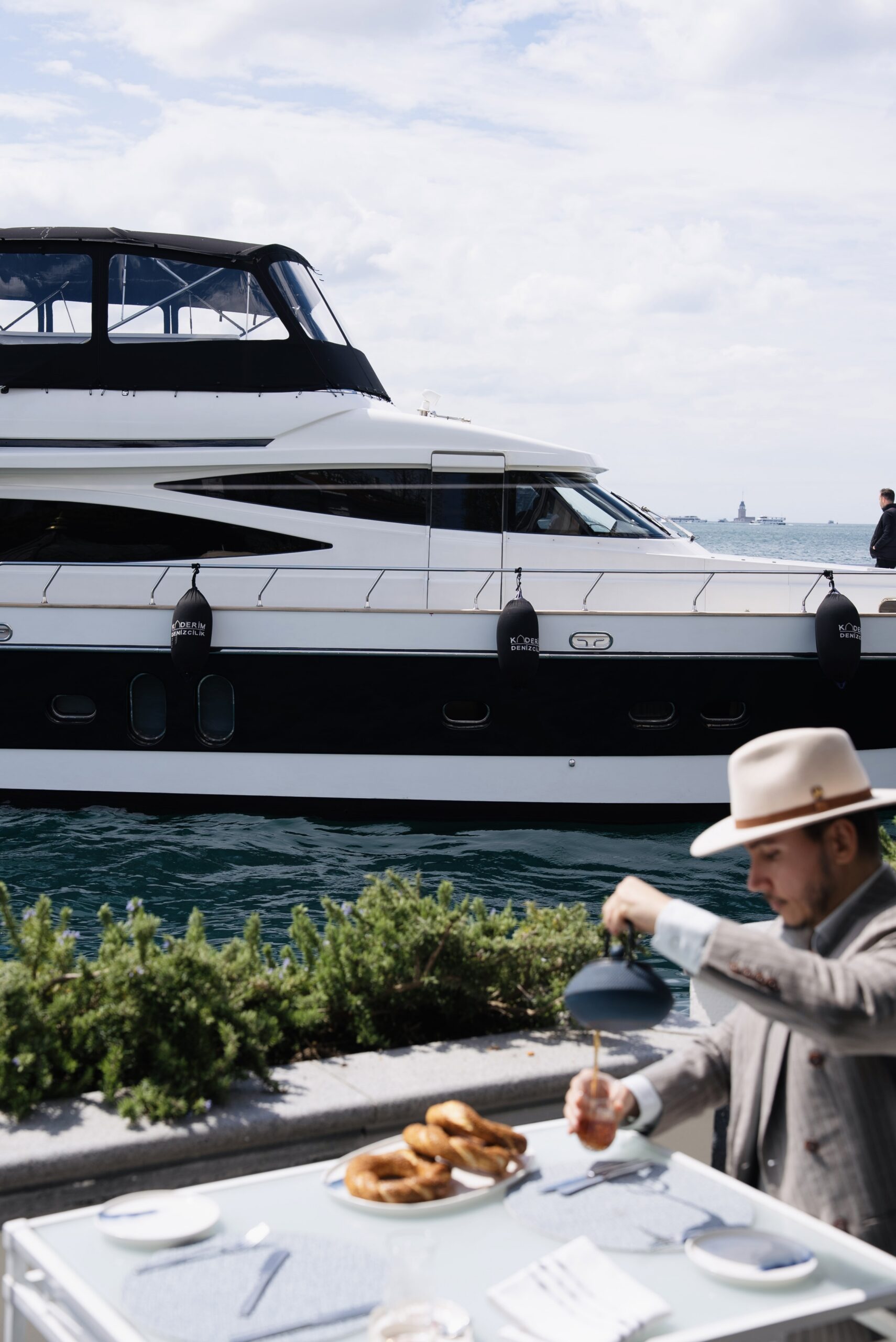
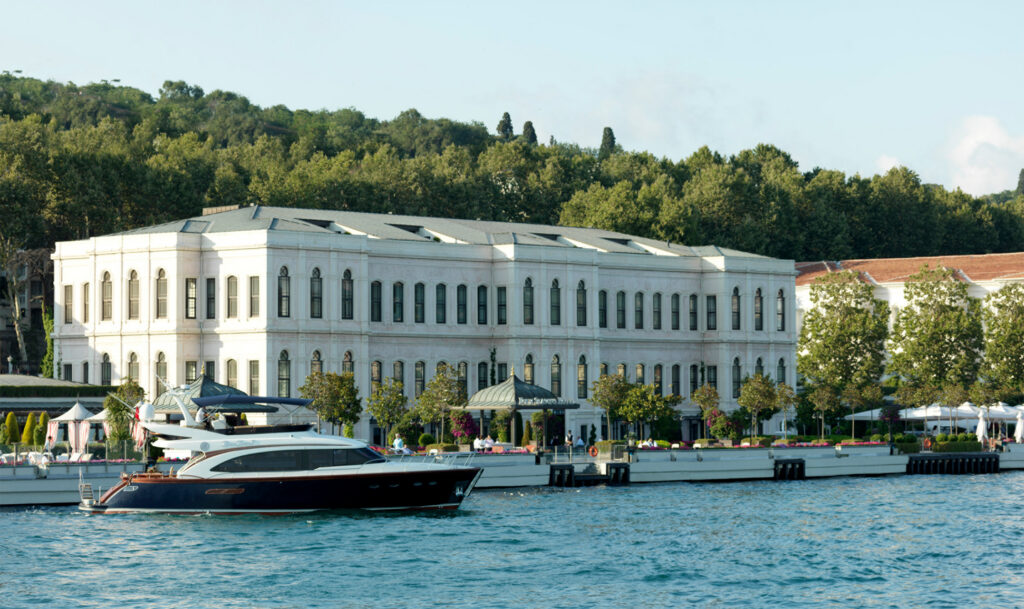
The Bosphorus is a living artery, and the former Ottoman palace that houses the Four Seasons Bosphorus sits directly on its edge like an elegant spectator box at the world’s most beautiful theatre. Ferries stitch together continents. Tankers glide silently toward the Black Sea. Fishing boats bob between Europe and Asia as if geography were merely a suggestion.
Your room overlooks the strait. High ceilings frame a view that no amount of interior design could compete with. The palace wears its history lightly. There are no dusty ropes or museum placards. Instead, marble gleams. Fresh flowers scent the corridors. The Ottoman Empire has simply been upgraded with Diptyque toiletries and exceptional WiFi.
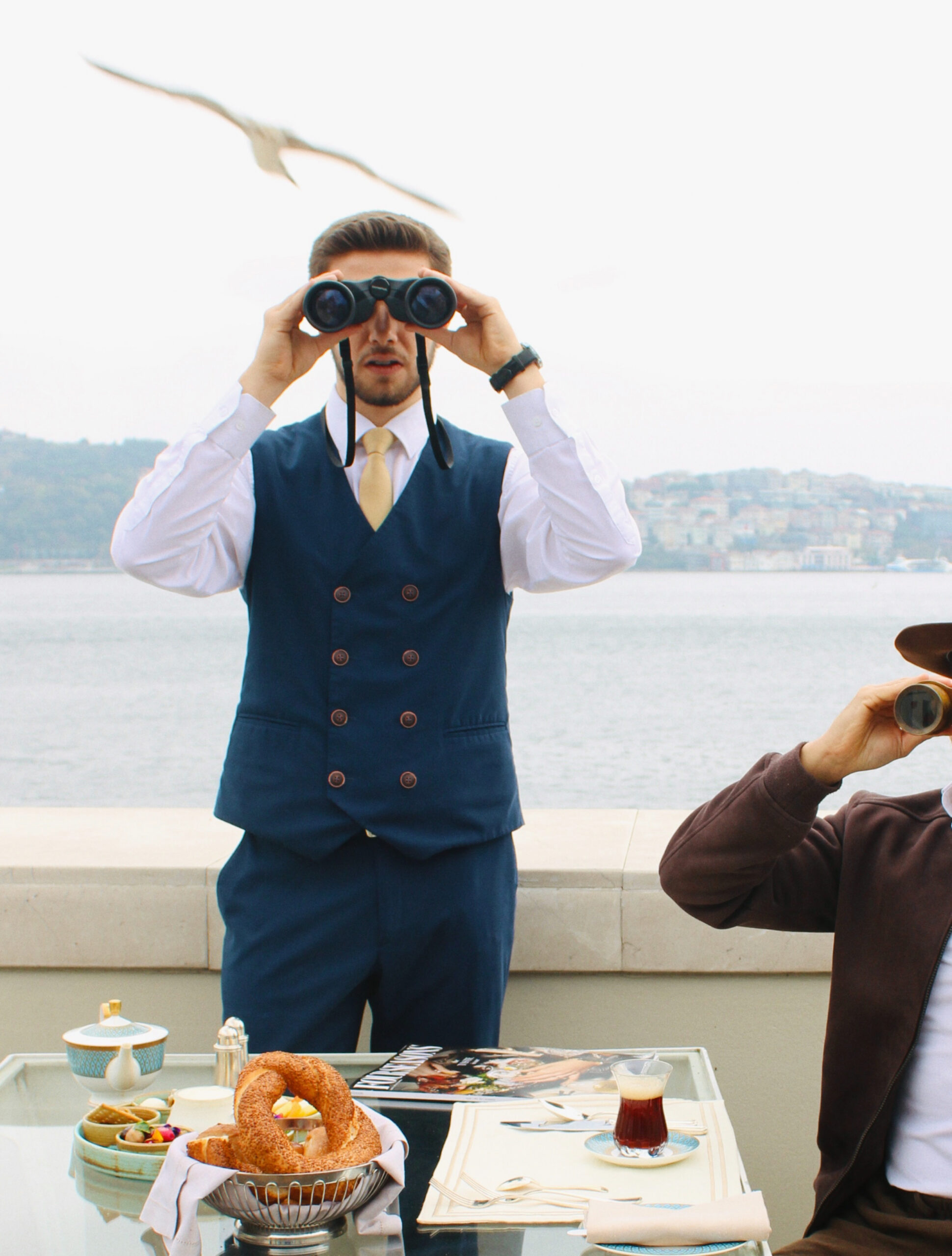
This is where the Crossroads of Civilization introduces itself not as a city, but as a stage set.
The city’s elite drift through the waterfront restaurants. Designer sunglasses appear at breakfast. Linen shirts billow in the sea breeze. Somewhere nearby, a billionaire is discussing shipping routes over Turkish tea.
You order another coffee.
The Bosphorus: Istanbul’s Eternal Main Character
Most cities have a river.
Istanbul has a spectacle.
From the waterfront terrace, the Bosphorus becomes a lesson in movement and permanence. Empires rose and fell on these waters. Byzantine galleys, Ottoman warships, Russian traders, modern ferries—everyone passes through the same narrow corridor.
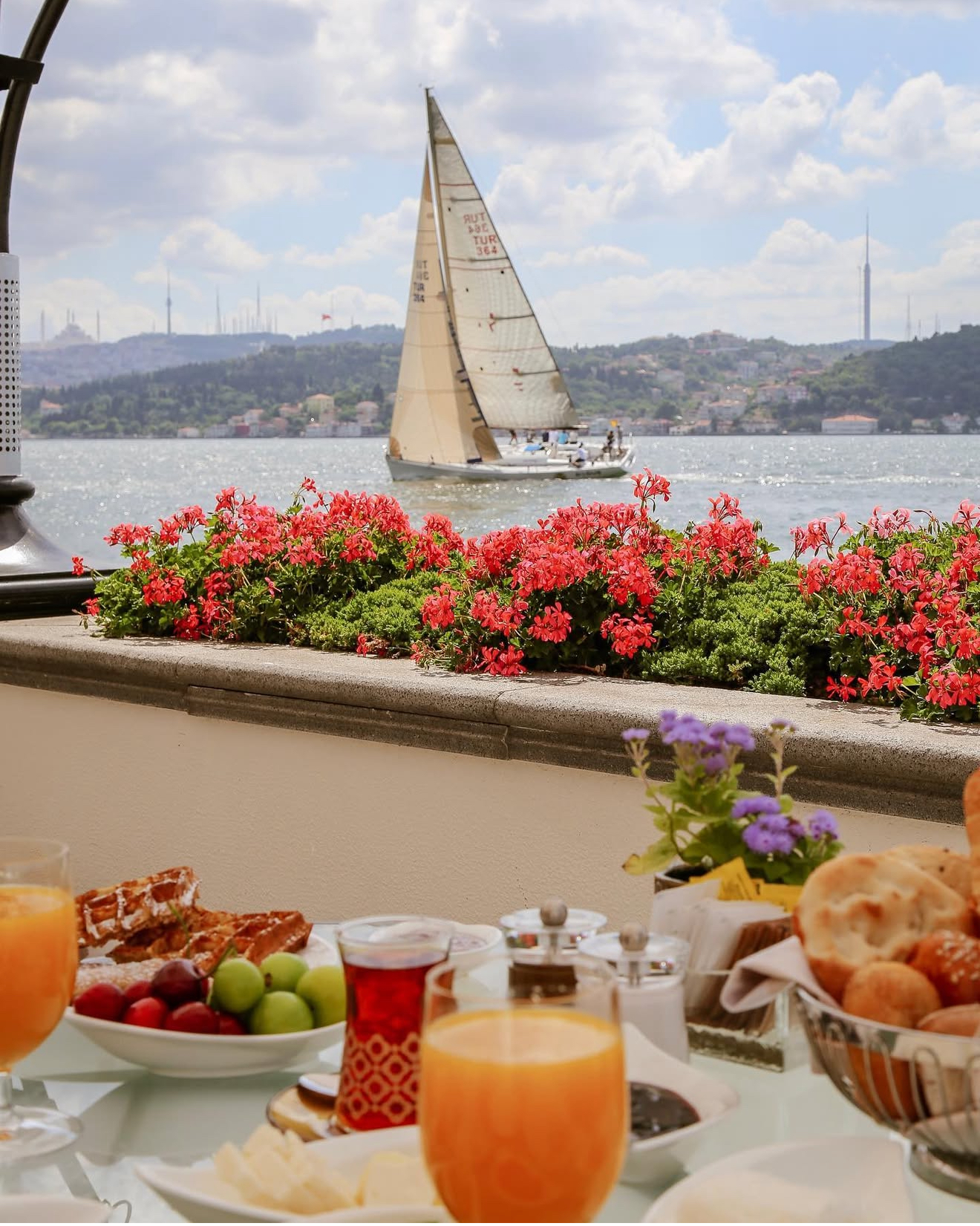
At Aqua, breakfast arrives like a still-life painting. Bowls of olives glisten in shades of emerald and obsidian. Local cheeses range from impossibly creamy to satisfyingly sharp. Honey drips from honeycomb. Tomatoes taste as if they’ve been cultivated specifically to remind you what tomatoes are supposed to taste like.
The temptation is to stay exactly where you are.
The smarter move is to leave.
Live Like a Local, Sleep Like a Sultan
The secret is understanding that luxury isn’t separation from the city.
It’s immersion with excellent bedding.
Spend your mornings wandering Ortaköy, where fishermen cast lines beneath the Bosphorus Bridge and vendors dust kumpir potatoes with alarming quantities of toppings. Explore the backstreets of Beşiktaş. Sip tea in places where no one has redesigned anything since 1978.
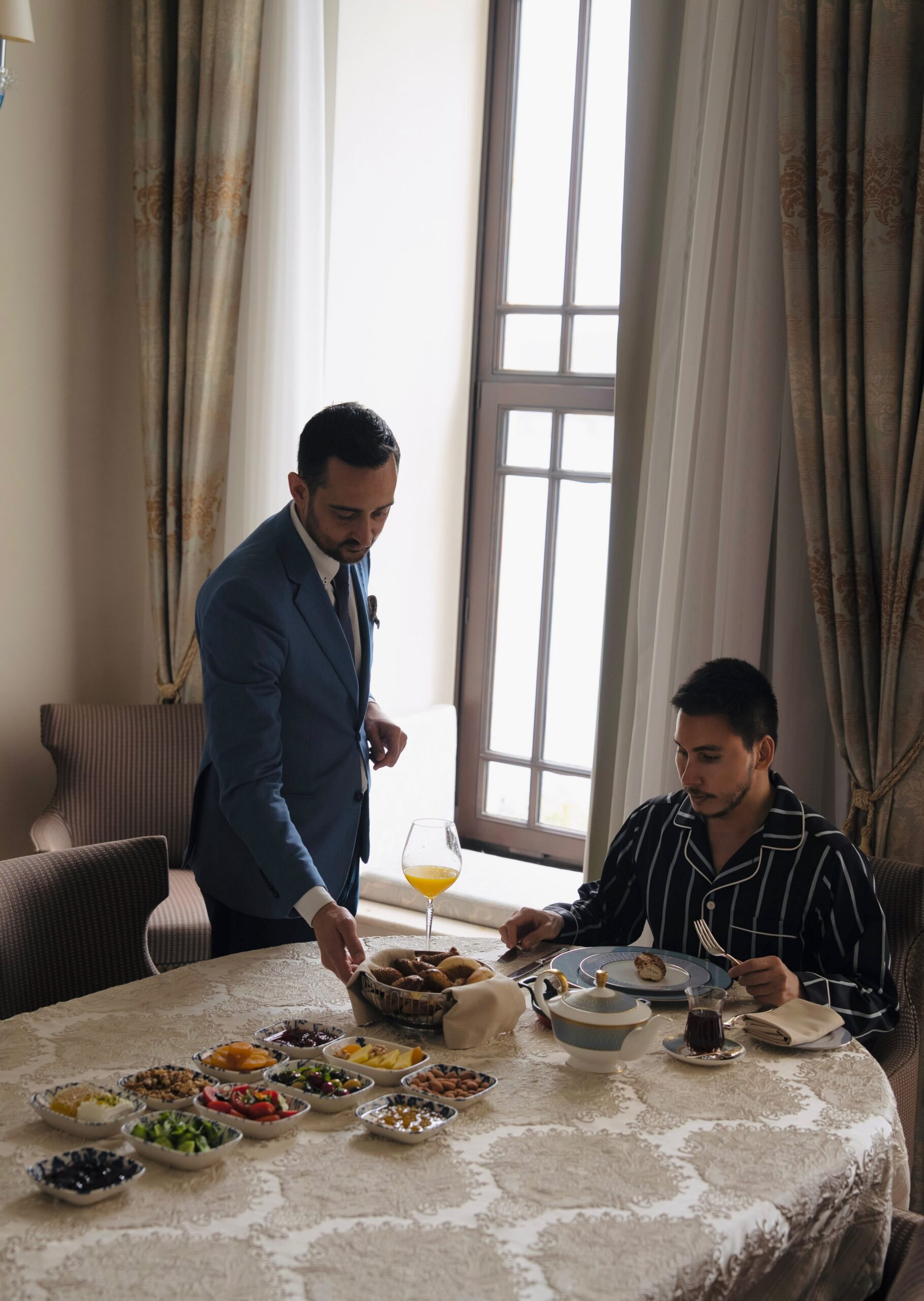
Then return to the palace.
This rhythm—chaos followed by calm—is what Istanbul does best.
By afternoon, the hammam awaits.
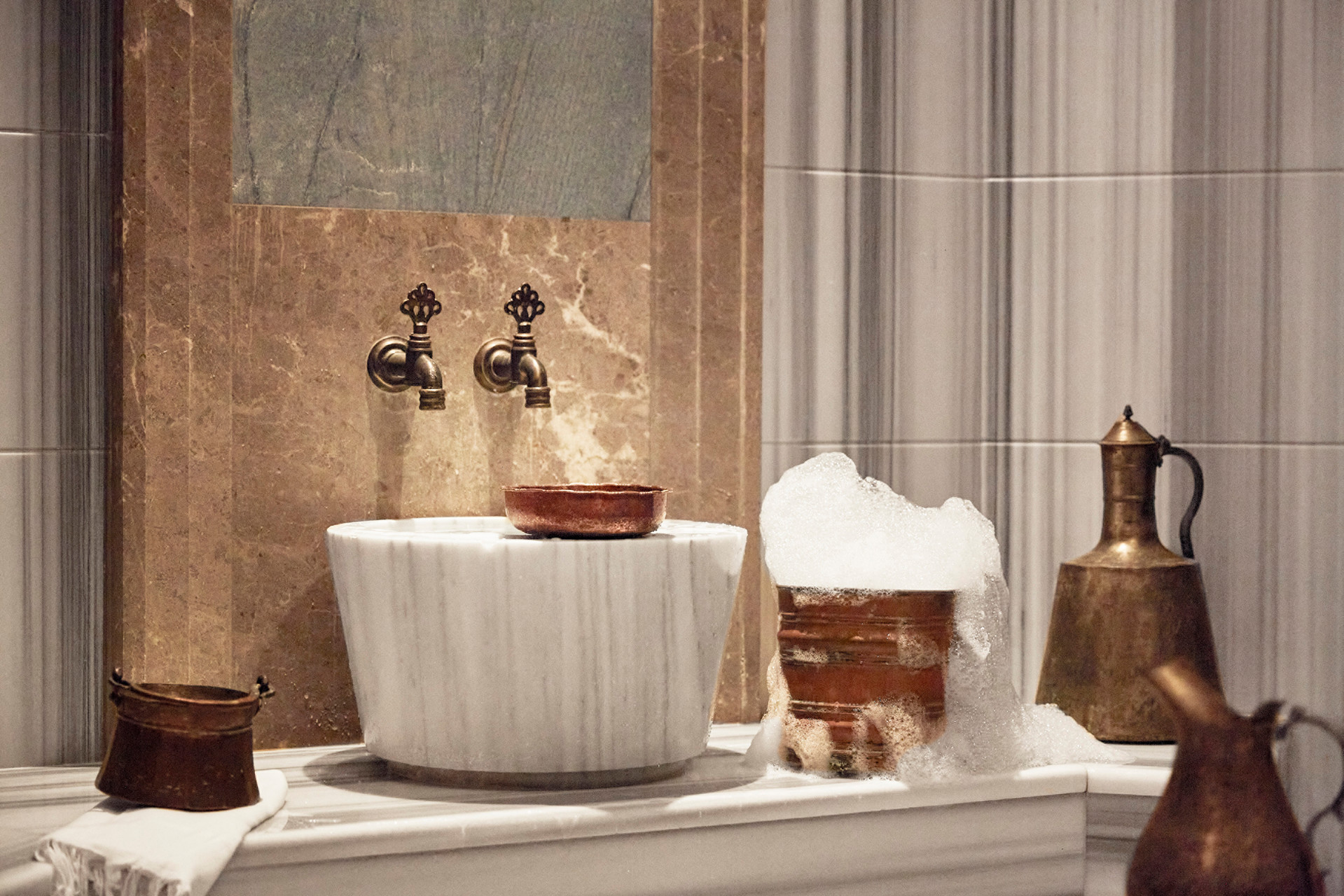
Inside the marble sanctuary, steam blurs centuries together. Ottoman sultans understood something modern wellness culture is still trying to rediscover: water heals, heat slows time, and a good scrub can feel like spiritual renewal.
You emerge polished, relaxed, and mildly convinced you’ve inherited a small kingdom.
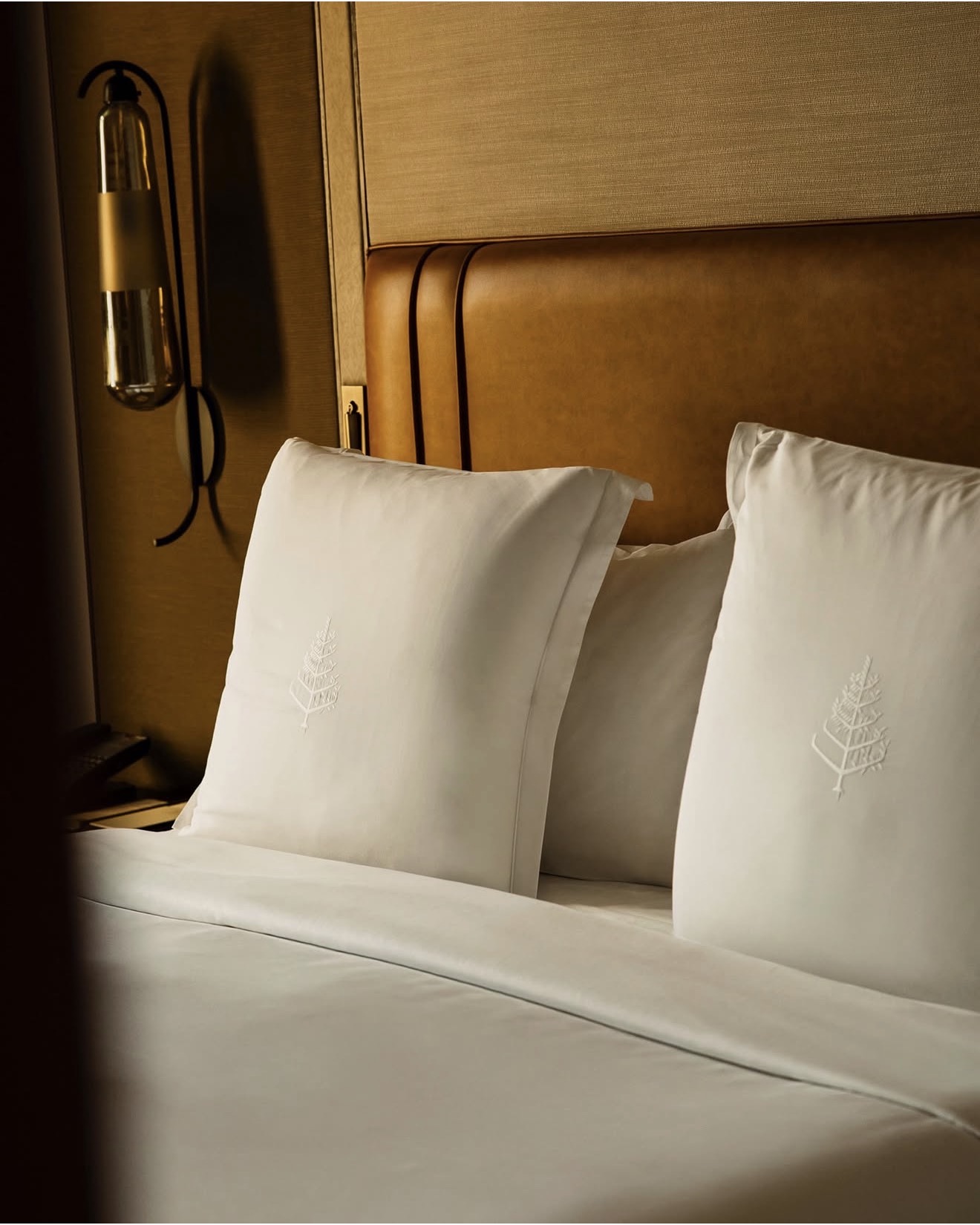
Crossing Through Time
The transfer between the two Four Seasons properties may be the most cinematic hotel shuttle on earth.
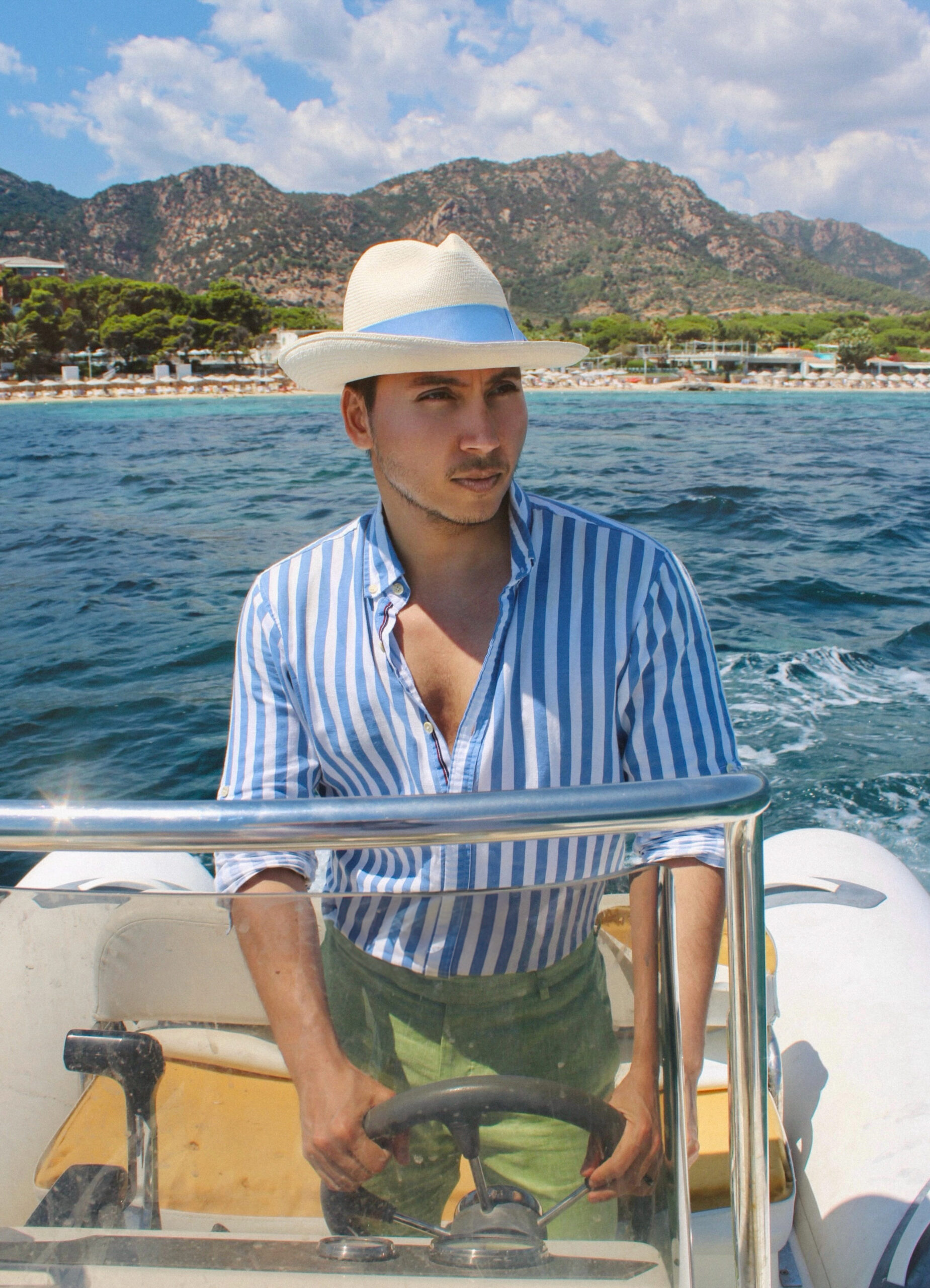
Forget black SUVs. Here, you board a boat.

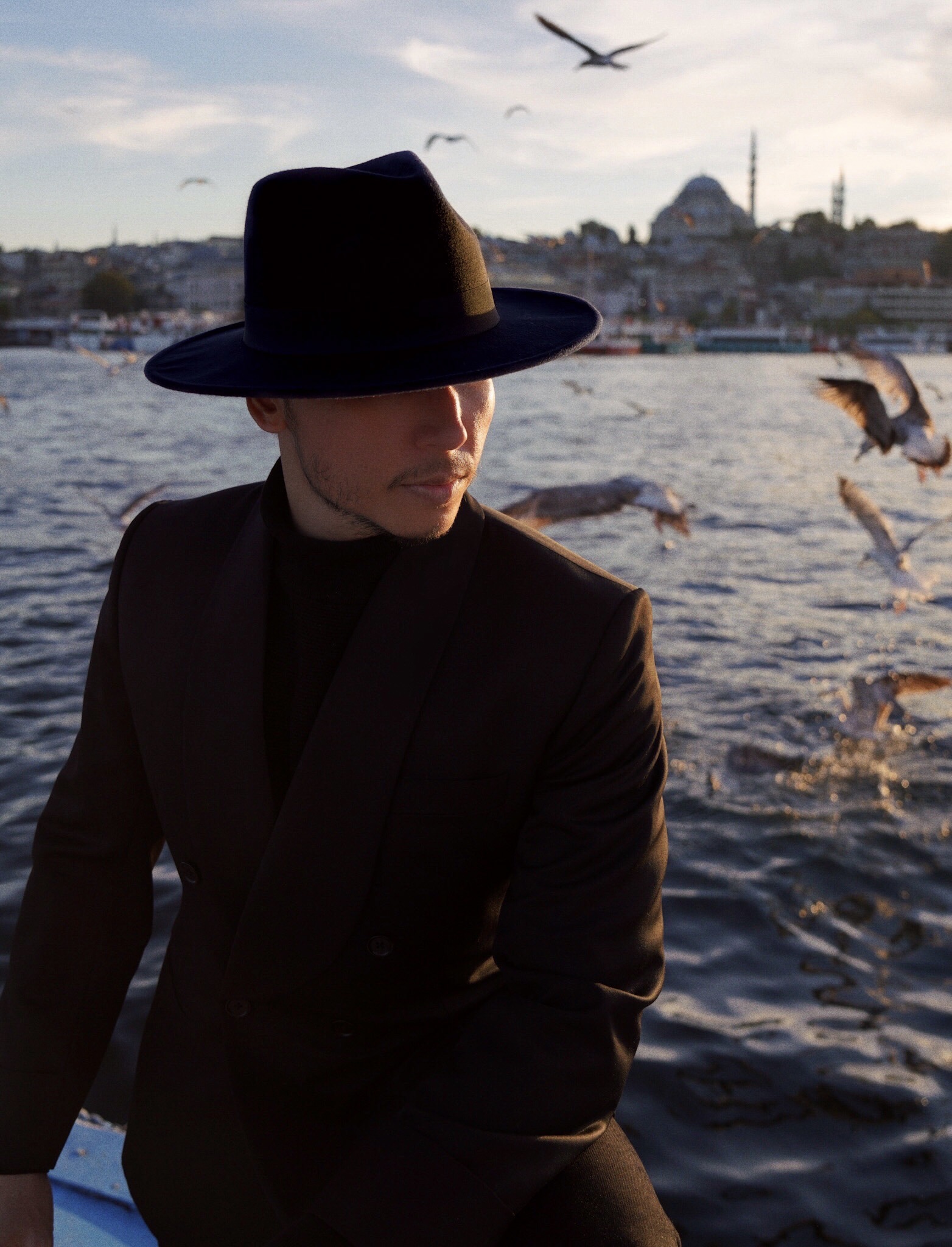
As the Bosphorus palace recedes behind you, the city unfolds like an illuminated manuscript. Minarets punctuate the skyline. Seagulls perform aerial acrobatics. The city appears simultaneously ancient and unfinished, forever evolving.
This short journey acts as a portal.
The Bosphorus belongs to Istanbul’s present.
Sultanahmet belongs to its past.
Storied Past That Became a Palace
Only Istanbul could transform a former prison into one of the world’s most refined hotels.
The pale-yellow façade sits steps from Hagia Sophia, the Blue Mosque, Topkapı Palace and the Basilica Cistern. Yet somehow, once inside, silence descends.
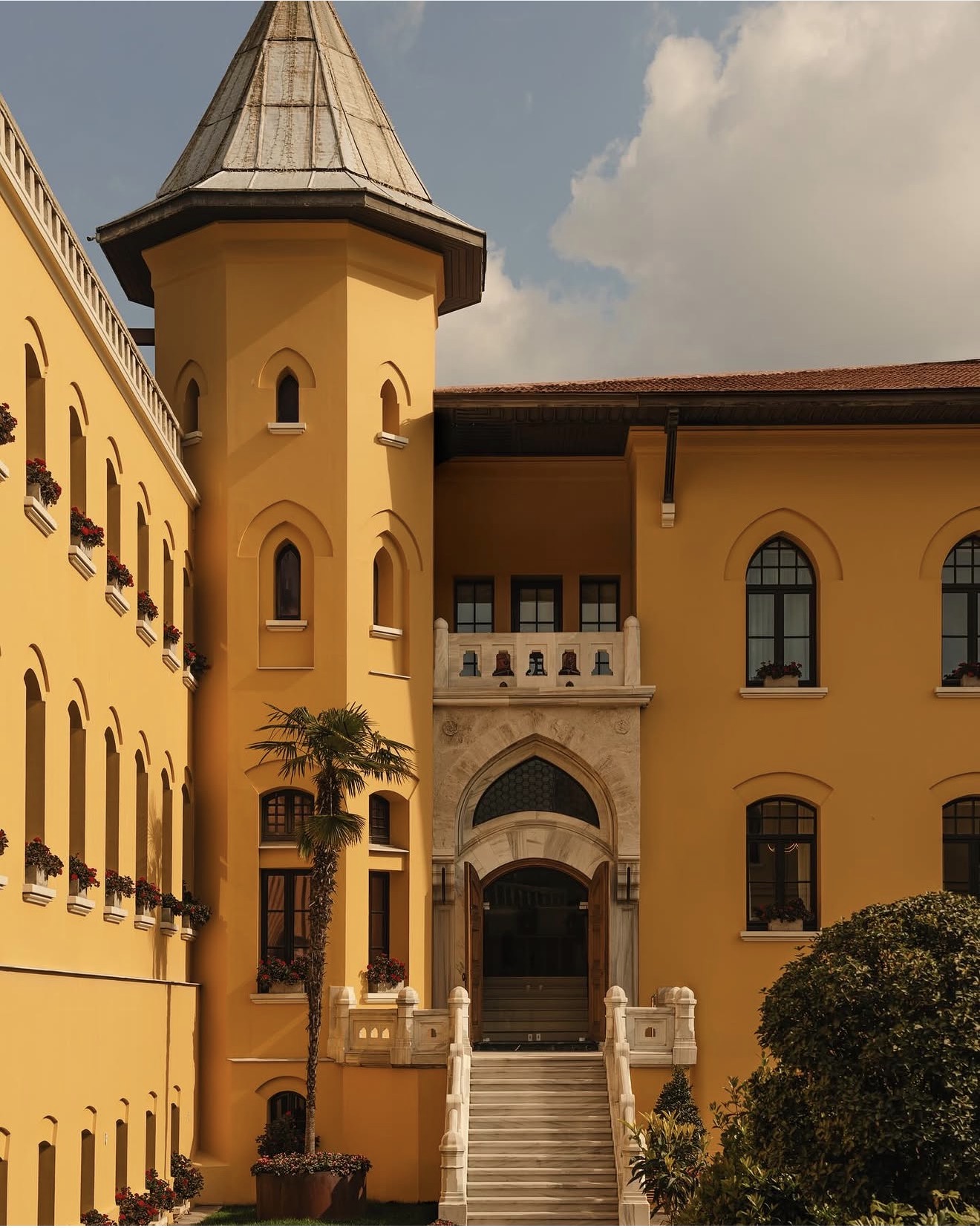
The former exercise yard has become a garden courtyard. Cells have become suites. Confinement has become liberation.
History here rarely disappears. It simply changes costumes.
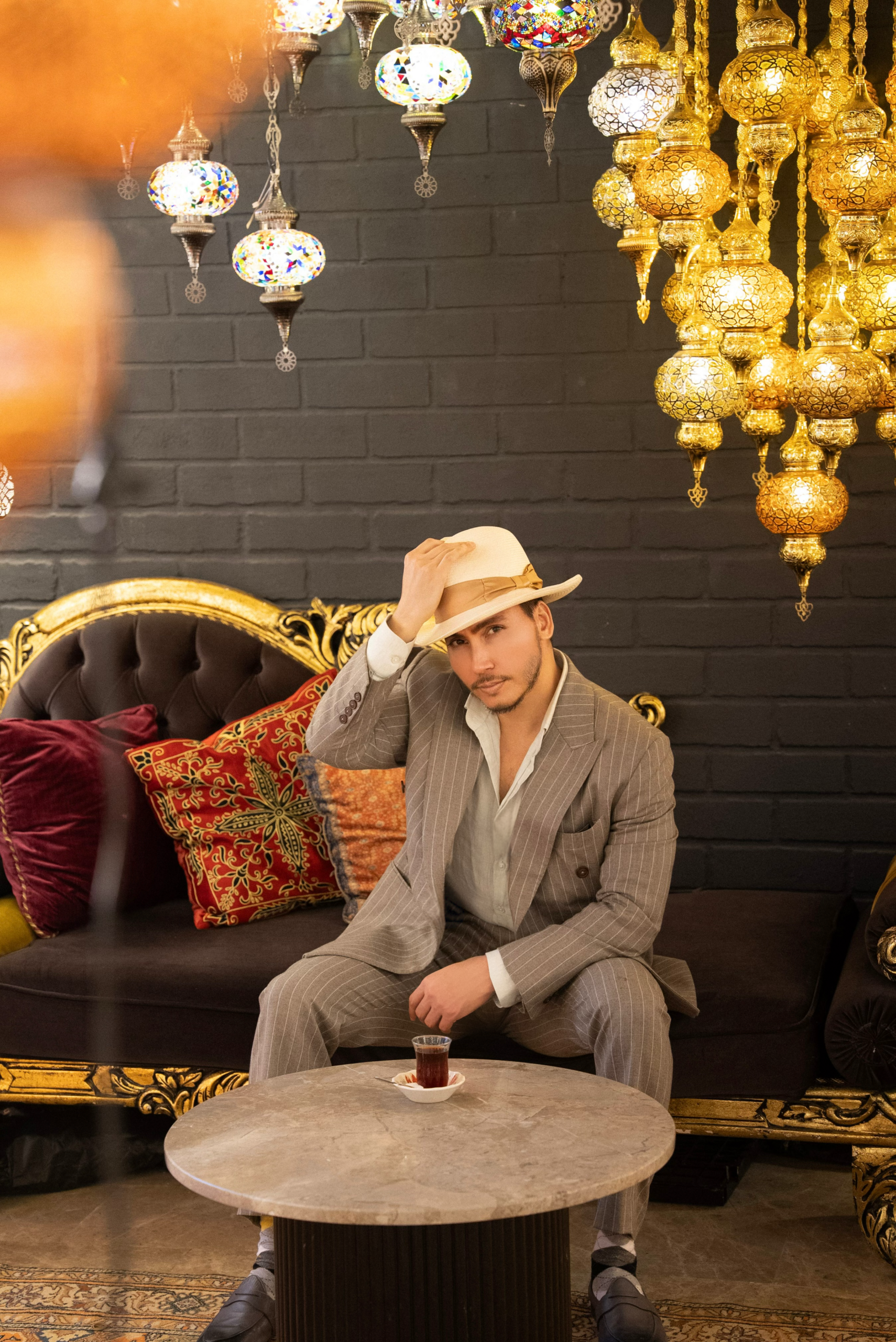
The rooms feel residential rather than theatrical. Rich textiles, Ottoman influences and contemporary comfort coexist without trying too hard. You get the sense that an impossibly wealthy Istanbul family might actually live here.
And perhaps, in some alternate timeline, they do.
The City of Three Empires
This is where Istanbul becomes truly intoxicating.
Stand in Hagia Sophia in the morning.
A church.
A mosque.
A museum.
A mosque again.
One building. Multiple lives.
The same pattern repeats everywhere.
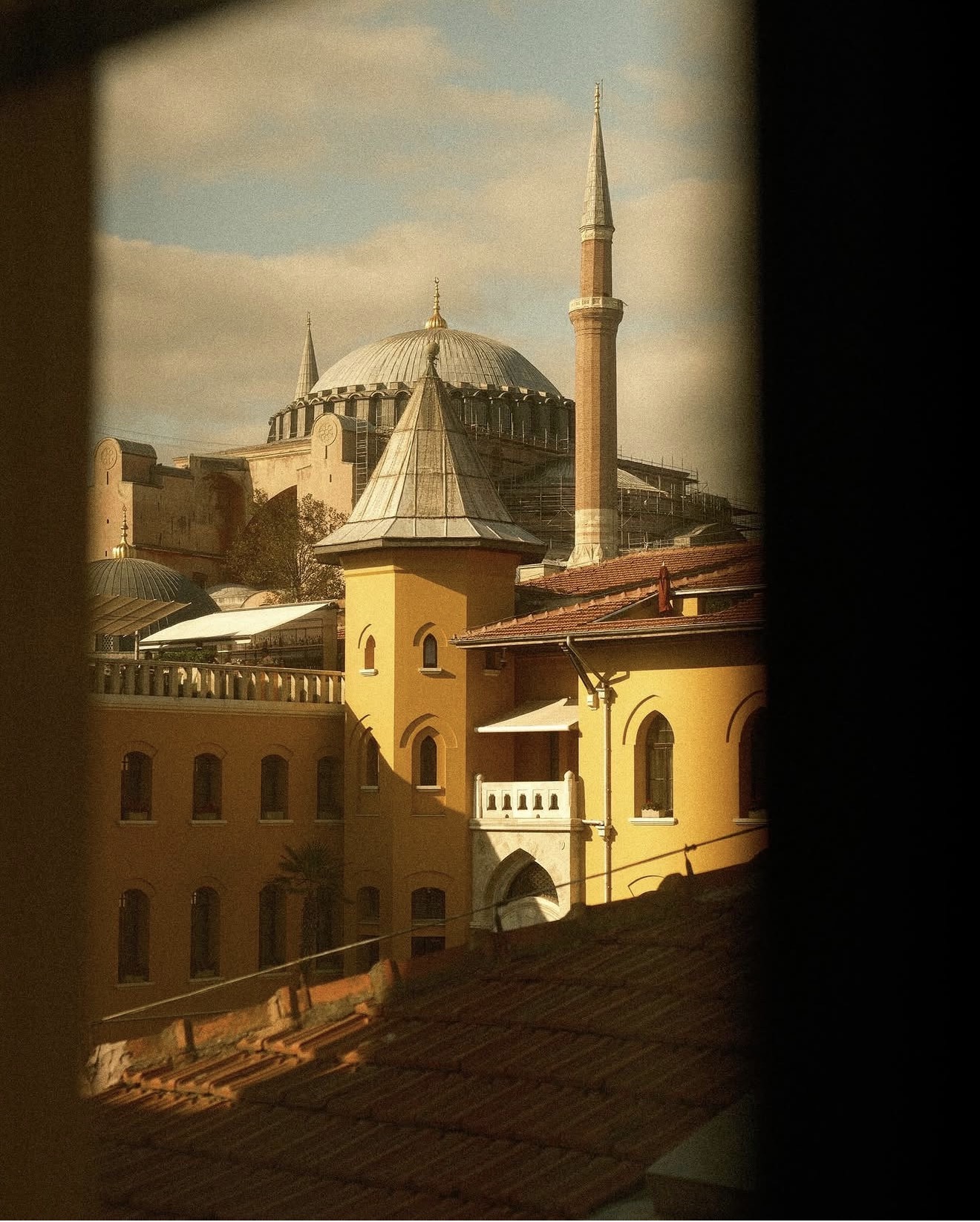
Roman foundations support Byzantine walls that support Ottoman additions that support modern cafés. Istanbul doesn’t erase history. It stacks it. Walking through Sultanahmet feels like wandering through geological layers of civilization.
Every corner reveals another chapter.
A Byzantine column.
An Ottoman fountain.
A contemporary gallery.
A teenager scrolling TikTok beneath architecture older than most countries.
Past, present and future occupy the same frame.
The Art of Looking Closer
Visitors often arrive with a checklist.
Hagia Sophia. Check.
Blue Mosque. Check.
Grand Bazaar. Check.
Istanbul deserves better than that.
Spend an afternoon chasing contemporary art instead. Wander through galleries hidden behind historic façades. Notice how Turkish artists constantly negotiate between East and West, tradition and innovation, memory and possibility.
The city itself behaves like a work of art.
Textures matter here.
The polished marble of a hammam.
The worn stone of a Byzantine wall.
The lacquered wood of an Ottoman yali.
The copper glow of sunset reflecting off mosque domes.
Istanbul rewards attention.
Evenings in Sultanahmet
At sunset, head to Süreyya.
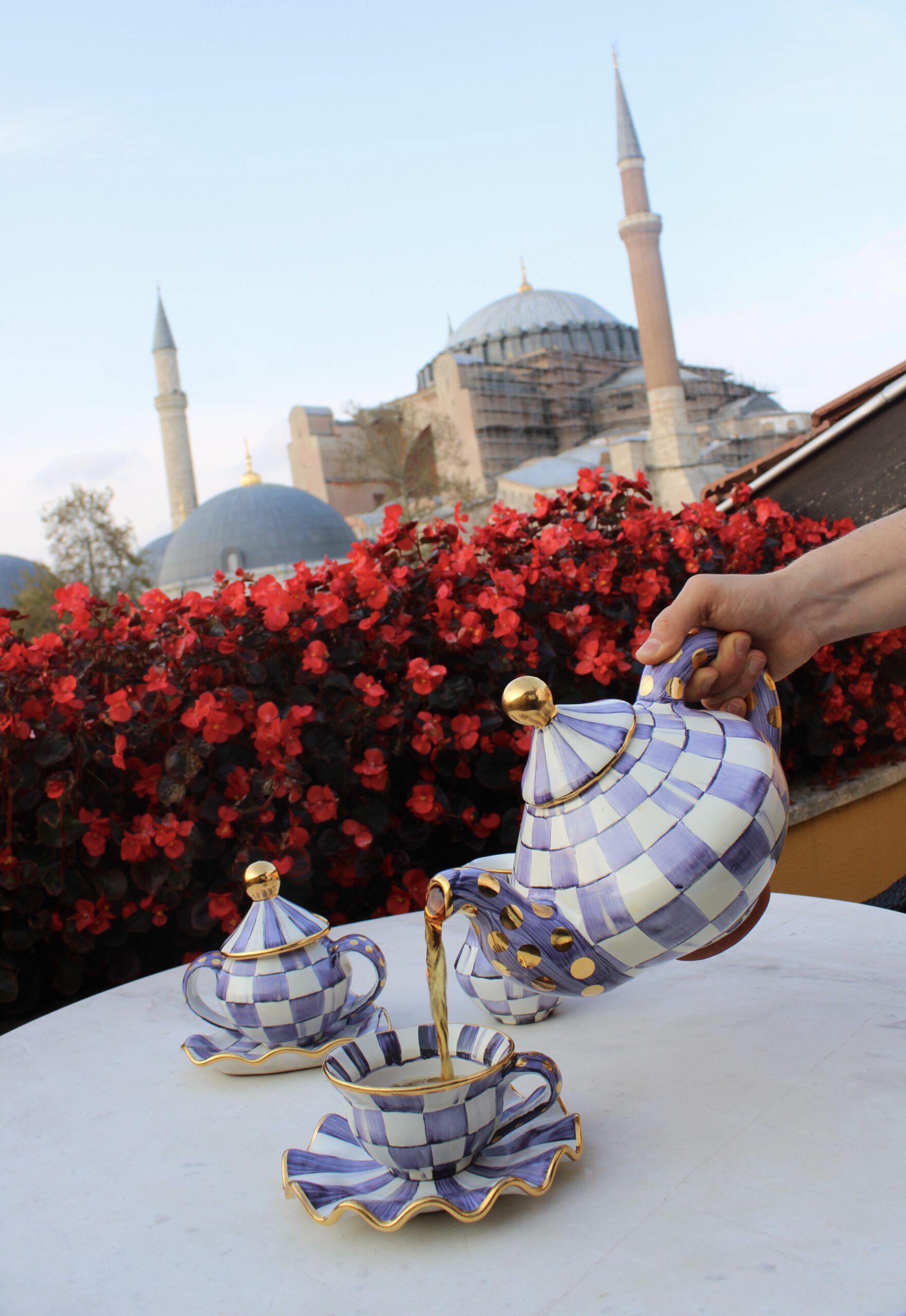
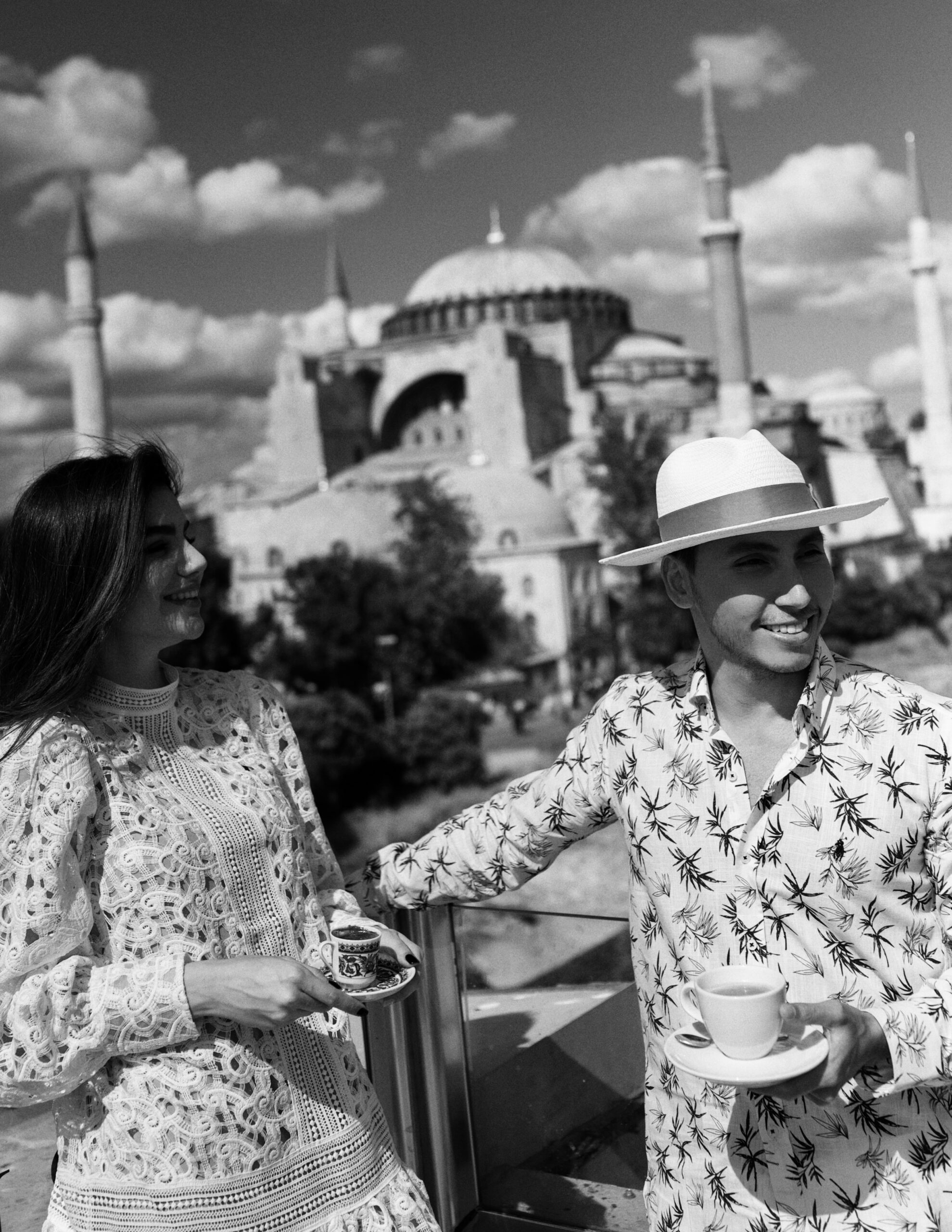
A glass of Turkish wine in hand, Hagia Sophia rises beyond the terrace like a dream rendered in stone. As the call to prayer drifts across the historic peninsula, the city seems suspended between dimensions.
This is not nostalgia.
This is continuity.
The same sound has echoed here for generations.
The same skyline has inspired travellers, conquerors, artists and dreamers.
Only the audience changes.
The Future
People often describe Istanbul as a bridge between East and West.
It’s a convenient cliché.
The reality is more interesting.
Istanbul is a city obsessed with becoming its next version while preserving every previous one. Luxury hotels inhabit palaces. Former prisons become sanctuaries. Contemporary artists reinterpret ancient symbols. Ferries that have crossed these waters for decades now carry guests armed with smartphones and digital boarding passes.
The city doesn’t choose between history and progress.
It insists on both.
And they understand this instinctively.
One property celebrates the grandeur of the Ottoman waterfront. The other places you inside the very heart of the historic peninsula. Together, they create a complete portrait of this iconic city—not merely as a destination, but as an ongoing conversation between centuries.
No Ordinary Morning
On your final day, wake early.
Open the curtains.
Watch the city begin again.
Maybe it’s the Bosphorus glittering beneath a pale sunrise. Maybe it’s Sultanahmet’s domes emerging from morning mist.
Either way, Istanbul performs its oldest trick.
It convinces you that time is fluid.
That the past is not behind us.
That the future is already arriving.
And that for one glorious week, sleeping like a sultan while exploring like a local might just be the most sensible way to experience the world’s most extraordinary city.
By: Lucas Raven