Tokyo has no shortage of extraordinary experiences, but few challenge your senses quite like teamLab Planets, where art, technology and imagination collide in a world designed not simply to be seen, but experienced.
By Chris Flanagan, Managing Editor, The Raven Reports
The floor disappears first. Then the walls. Then, somewhere around the moment the water reaches your knees and a shoal of luminous digital koi scatters around your bare feet, so does your sense of where the art ends and you begin.
Welcome to teamLab Planets — a museum with no glass cases, no velvet ropes, and no “please do not touch.” Here, you don’t just look at the art. You wade through it, climb into it, and occasionally become part of it, whether you meant to or not.
What teamLab Planets Is
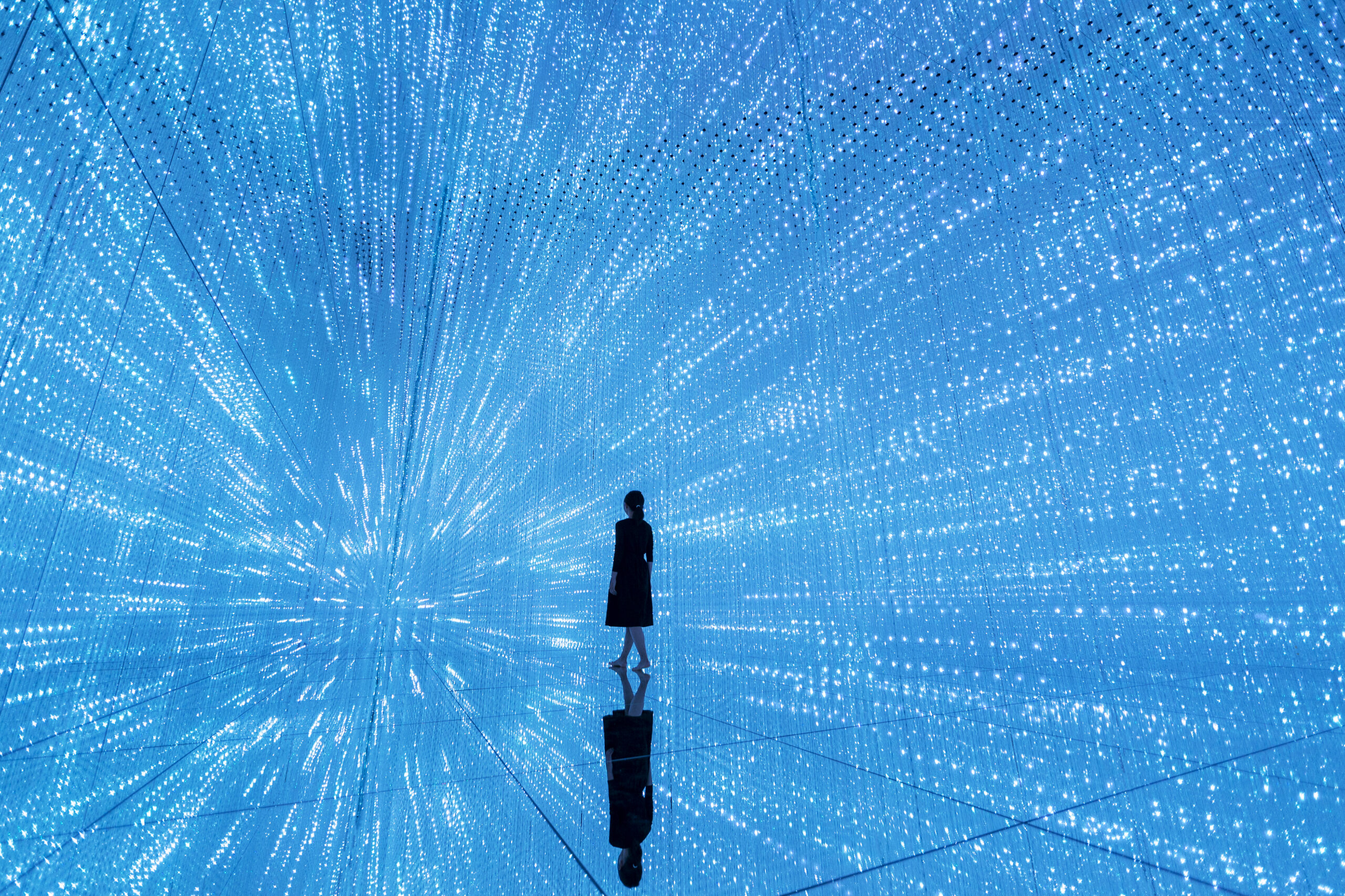
teamLab Planets is the brainchild of teamLab, the Tokyo-based art collective that has spent two decades blurring the line between technology, nature, and the human body until there’s barely a line left. Most museums ask you to stand back. This one asks you to step in and surrender a little — a philosophy the collective calls “Body Immersive.”
Since opening its doors in Toyosu in 2018, it has quietly, soggily become one of the great phenomena of contemporary art, and the numbers are nothing short of staggering: teamLab Planets holds the Guinness World Record for the most-visited museum dedicated to a single art group anywhere on the planet, drawing 2,504,264 visitors between April 2023 and March 2024 — more than Amsterdam’s Van Gogh Museum, more than Barcelona’s Picasso Museum, more than almost anyone would believe for a place where you walk around with wet ankles. It’s the second Guinness title for a teamLab property, following teamLab Borderless’s own record-breaking run in 2019. In Google’s “Year in Search 2023” rankings, Planets placed fifth among the most popular museums on Earth — the only Japanese institution to crack a list otherwise stacked with the Louvre and the British Museum. By 2025, annual visitors climbed past 2.51 million, a number that puts a museum built on light and water in the same conversation as the most storied institutions in history.
And just when you think you’ve seen the whole fantasy, it grows. In January 2025, teamLab Planets expanded by roughly 1.5 times with an entirely new “Forest” area, anchored by the sprawling Athletics Forest — a playground for grown-ups where climbing, balancing, and full-body wonder are not just allowed but required — alongside fresh additions like FuturePark and the Catching and Collecting Forest. The museum now spans four distinct realms: Water, Garden, Forest, and Open-Air, each with its own gravity.
The Experience, Room by Room
The journey begins, appropriately, by getting your feet wet. In the Water area, you wade through a shallow, mirrored pool as shoals of luminous koi scatter and reassemble around your legs, utterly unbothered by your presence — a living piece that reinvents itself with every visitor who wanders through, so no two trips are ever quite the same.
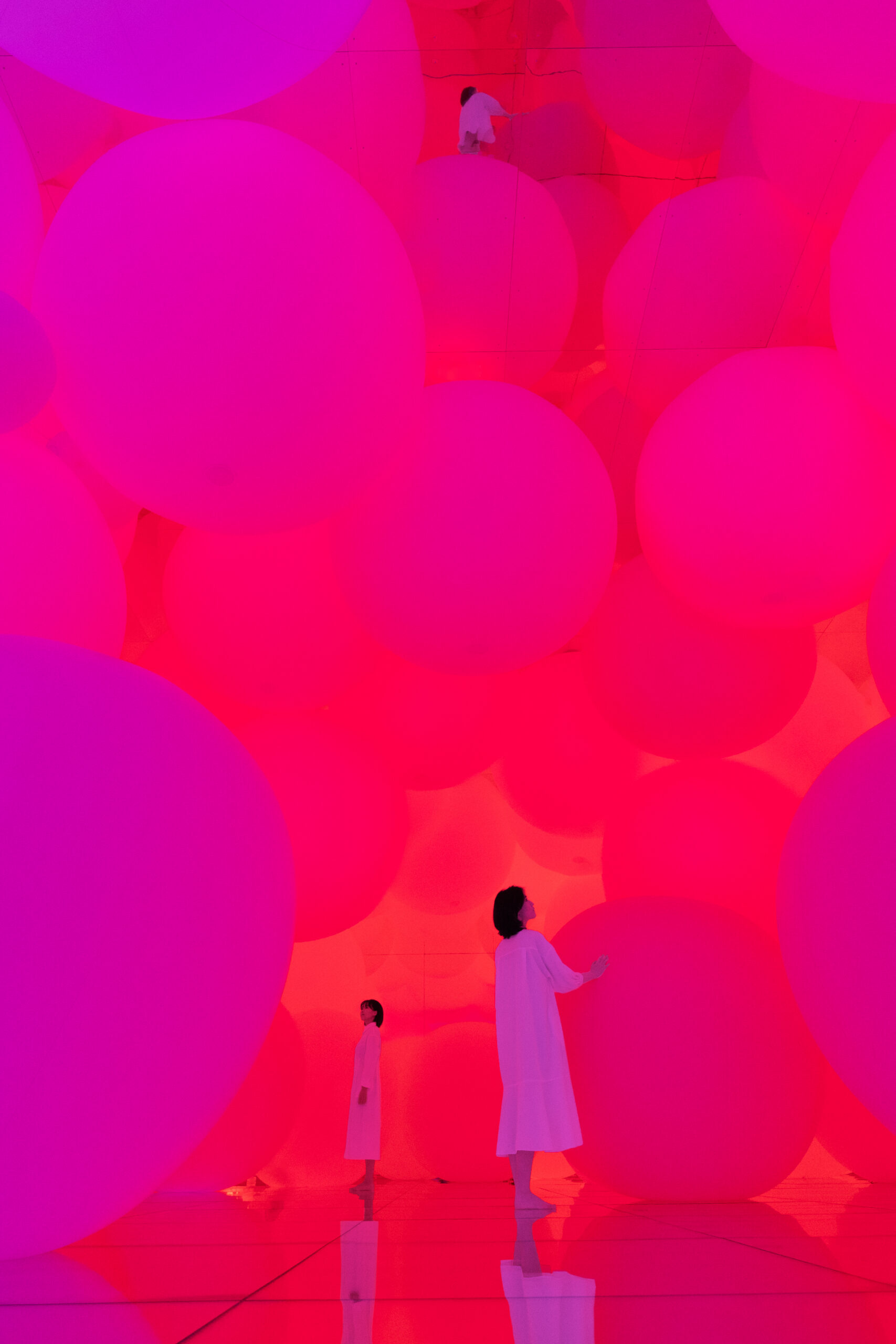
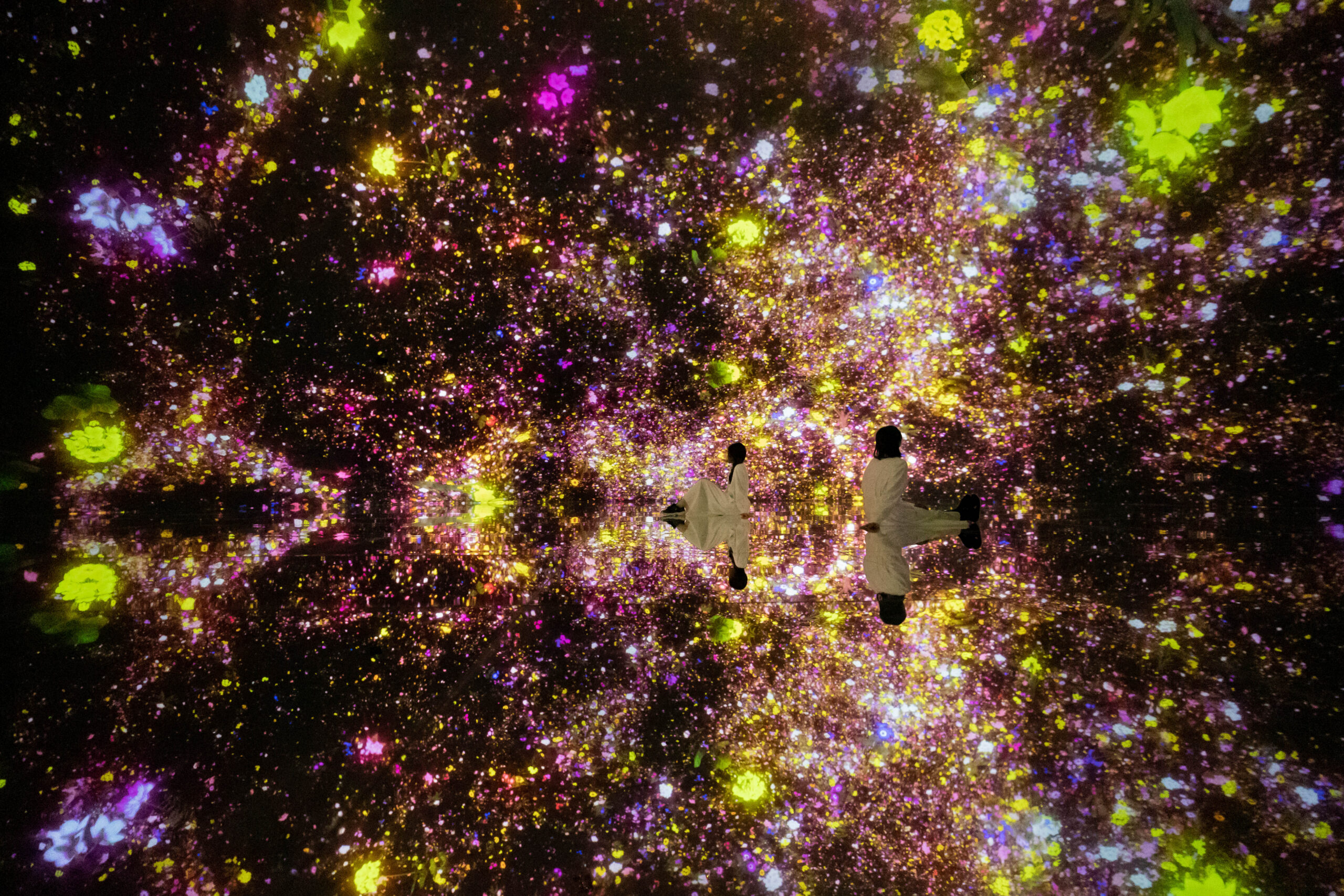
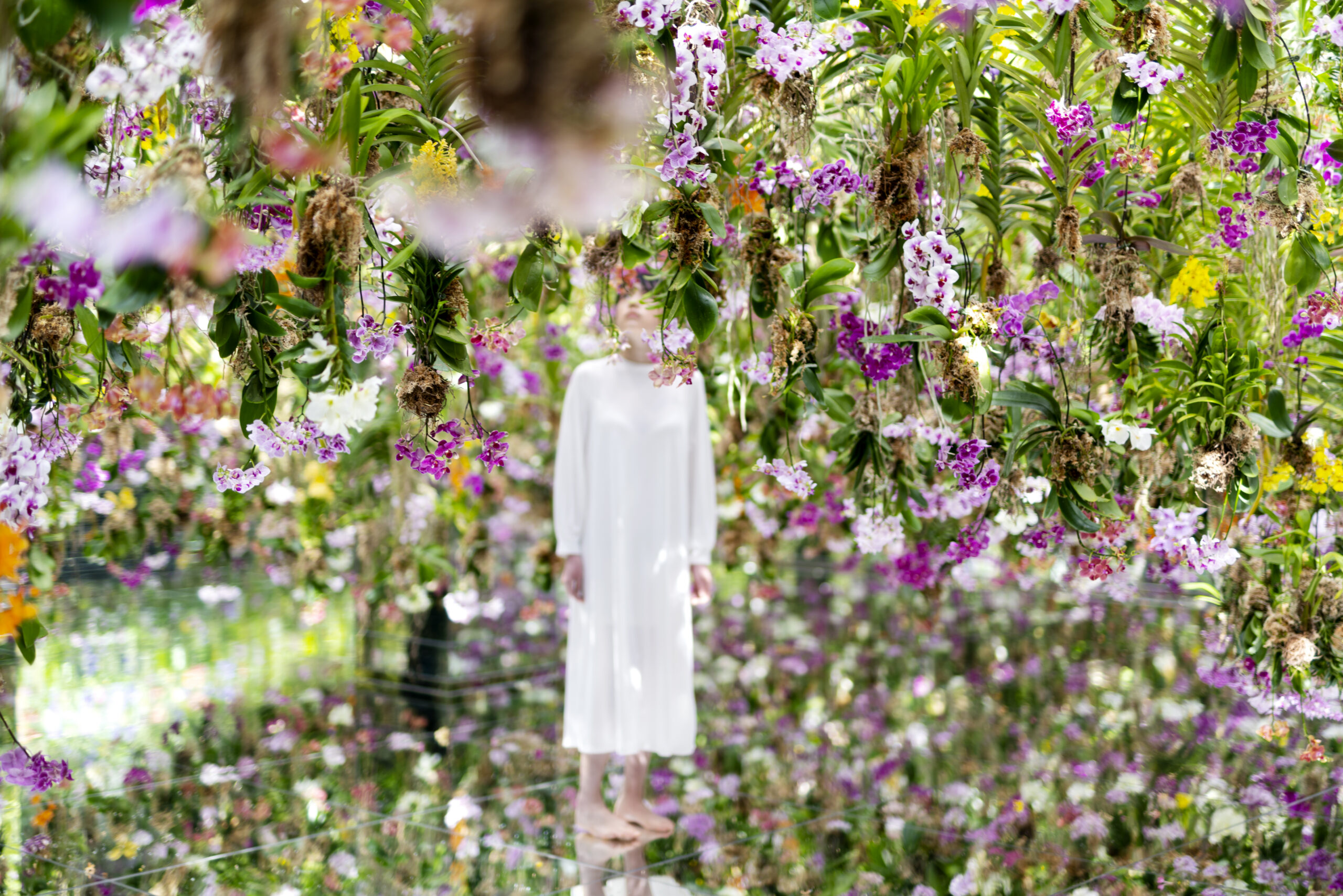
Then comes the moment that launches a thousand phone cameras: the Garden area, Floating Flower Garden: Flowers and I are of the Same Root, the Garden and I are One, a spherical room where blossoms bloom, wilt, and scatter across every surface — floor, walls, ceiling, you — in an endless seasonal loop. For a few magical weeks each spring, this room and its koi-filled neighbor burst into full cherry blossom bloom, timed to Tokyo’s hanami season, until the entire space feels less like a gallery and more like standing inside a snow globe made of sakura.
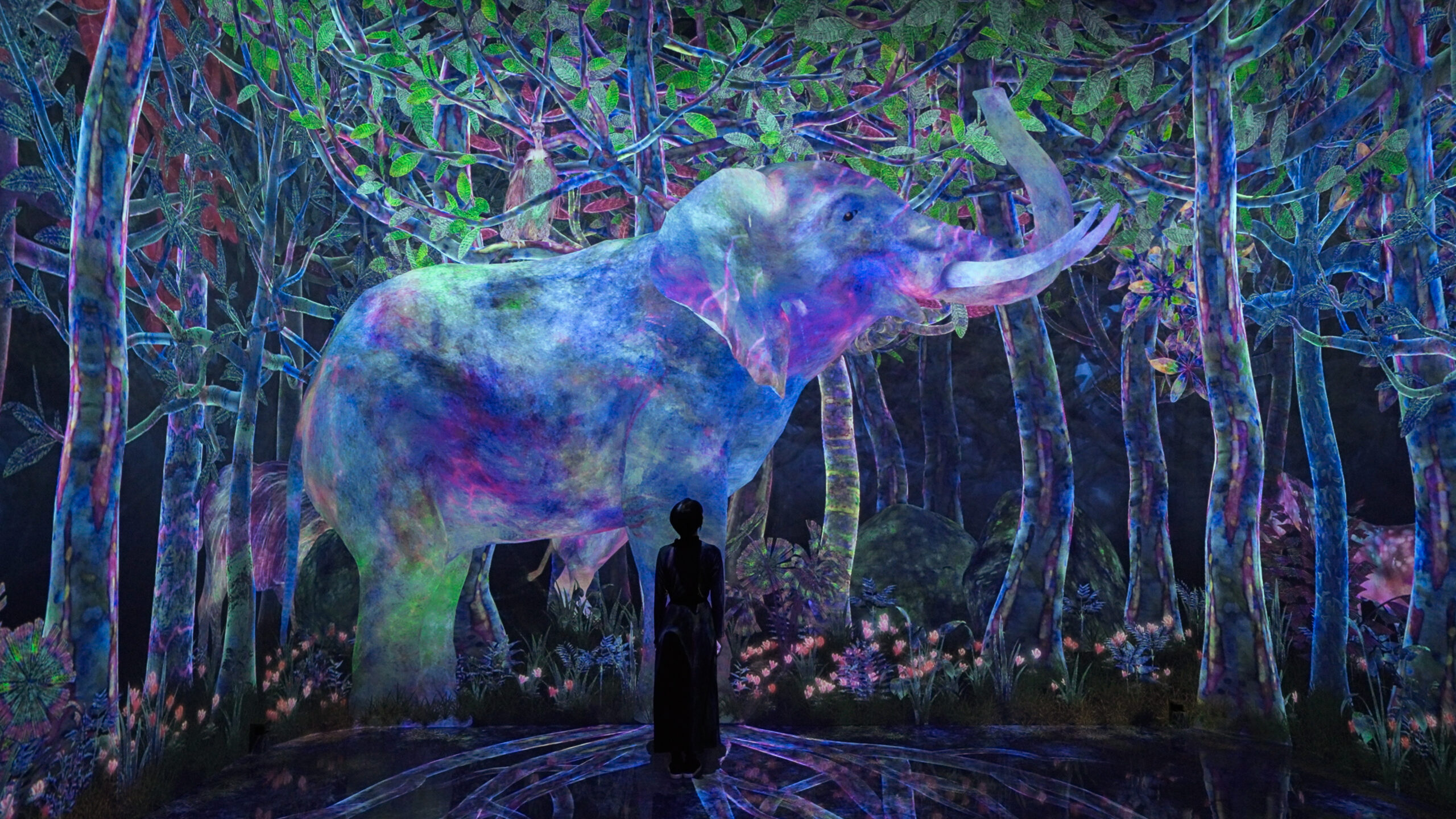
Just when you think the museum has shown you everything it has, the new Forest area flips the script entirely. The Athletics Forest trades quiet, dreamlike immersion for something closer to joyful chaos — climbing, balancing, tumbling through sculptural, light-reactive terrain like a kid let loose in the world’s most beautiful jungle gym. It’s proof that teamLab Planets isn’t just getting bigger. It’s getting bolder.
Beyond the Spectacle
What makes teamLab Planets compelling is not simply its scale or technological sophistication, but the way it challenges our relationship with art. There is no prescribed distance between the visitor and the work, no expectation to observe quietly from the sidelines. Instead, movement, touch and presence become part of the creative process.
For all its digital complexity, the experience feels surprisingly human. The installations respond to the people moving through them, creating moments that are fleeting, unpredictable and impossible to reproduce in quite the same way. It is this sense of participation that distinguishes teamLab Planets from more conventional museum experiences.
In a city celebrated for its ability to balance tradition with technological innovation, teamLab Planets offers a fascinating expression of contemporary Japanese creativity. It is ambitious, imaginative and, at times, wonderfully surreal —an experience that rewards curiosity as much as a willingness to surrender to the unexpected.
Practical Notes
teamLab Planets is located in Toyosu, a short walk from Shin-Toyosu Station on the Yurikamome line. Visitors go barefoot throughout the Water areas, so shorts or roll-up trousers are recommended. Tickets are timed-entry and frequently sell out in advance, particularly during cherry blossom season, so advance booking is essential. Plan for at least two hours to move through all four zones without rushing.
The Raven Verdict
An extraordinary collision of art, technology and pure imagination, teamLab Planets is one of Tokyo’s most compelling cultural experiences. Immersive, playful and wonderfully disorientating, it’s a reminder that the most memorable art isn’t always something you stand back and admire — sometimes, it’s something you step into.