
By Lucas Raven, Editor-in-Chief
Every Japan itinerary I build is a sprint. Temples at dawn, trains at noon, a dinner reservation you can’t be late for. So when the journey ended on a forested hillside above Ago Bay, I understood that someone had planned this finale with a very gentle hand.

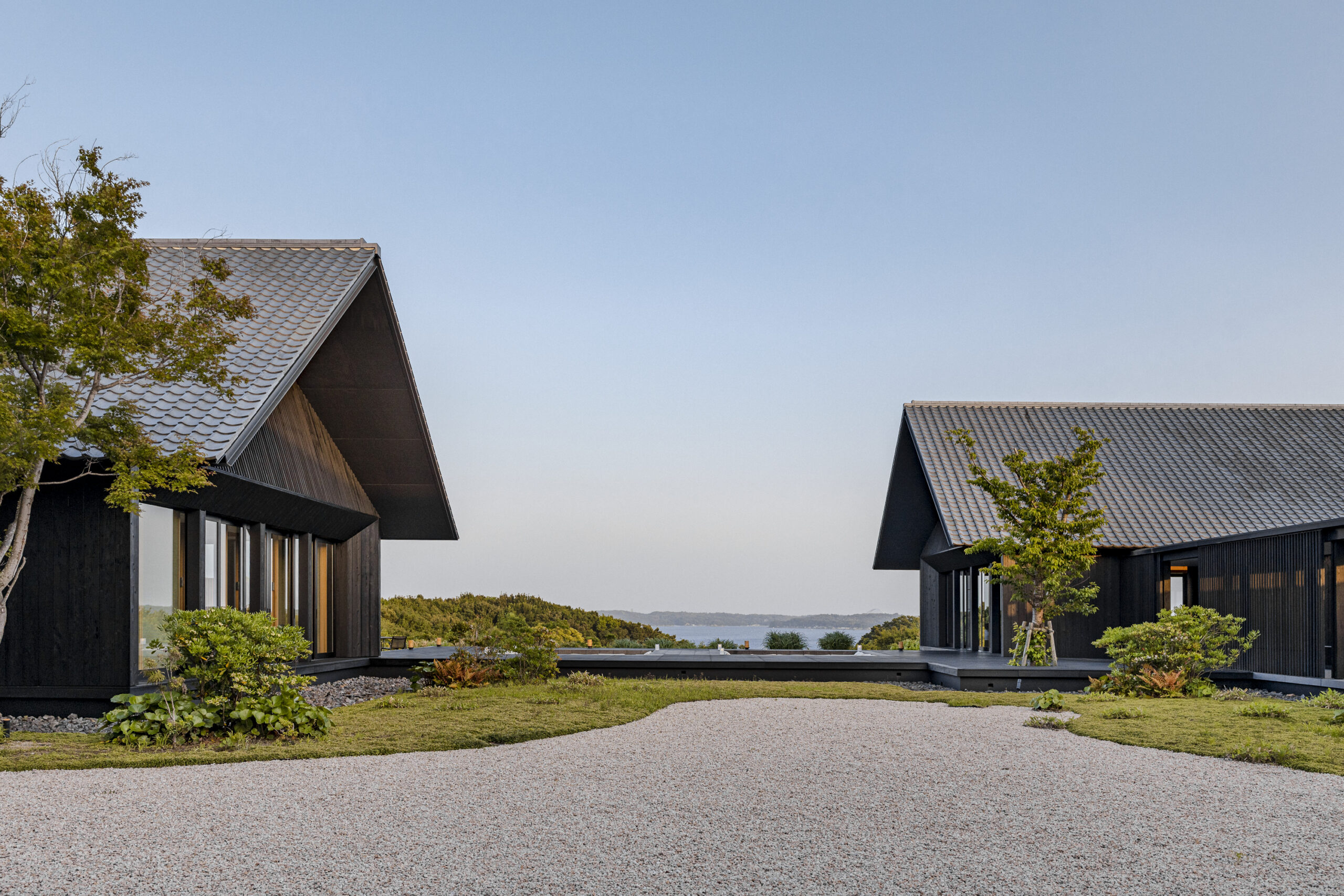
Amanemu sits inside Ise-Shima National Park, a landscape of pine-cloaked hills and a bay scattered with more than sixty islands and pearl rafts. The late Kerry Hill, the architect behind Aman Tokyo, designed it as a modern reading of the low-slung minka farmhouse. Pavilions step down the hillside as if the land had grown them. Hinoki walls are warm and fragrant. Glass slides open to verandas, and every frame holds a garden, a pine, or a slice of water. It looks Japanese and utterly contemporary at once, which is harder to pull off than it sounds. My suite had a deep stone tub fed by the hot spring itself. I regret nothing about how much time I spent in it. But the real water was at the spa.

There was a black stone bath, steam rising into cool air, and open-air pools with the forest all around. Hawks wheeled overhead while I soaked, entirely unbothered by my existence. Then came the watsu. I floated in warm water while a therapist cradled me, rocked me, and moved me through the pool like I weighed nothing. At some point the line between my body and the water simply dissolved. It felt like being held before I knew what holding was, a womb with better lighting. I came out feeling newly born, and slightly embarrassed by how much I’d needed it.

Then came the forest. A short drive inland, a path winds up through the trees to the waterfall at Ama-no-Iwato, a sacred site tied to the legend of the sun goddess Amaterasu hiding in a cave. Everything softens here.
Birdsong and the low rush of falling water layered over each other. Moss covered every stone, and sunlight came through the canopy in thin gold threads. Near the water stood a small shrine, and a gate marking the threshold. In Japan, passing through a shrine gate means leaving one world and entering another, the line between the physical and the spiritual. I felt it.
We were dressed in white, the color of purity, in simple robes cut like a karate gi, which left me feeling like the newest student in The Karate Kid. A man in ritual dress raised a horn, and its sound rolled through the trees.

He prayed and stepped into the falls first. Then it was my turn. He prayed over me as I walked into water so cold it emptied my mind in a single breath. There was no past and no itinerary, only the roar and a strange, bright quiet inside it. Somewhere under that cold, I think I crossed a gate of my own.
Lunch the next day was just as moving, in a different way. Outside the property, in a simple Ama hut, I met the women divers who have harvested these waters by free diving, with no tanks, for centuries. Legend ties them to Ise Jingu itself, with abalone offered to the gods. One of them grilled our lunch over charcoal: abalone, Ise lobster, fish, scallops, and a bowl of freshly cooked rice. She told me her story while she worked, and behind her the window framed Ago Bay. I’ve eaten in Michelin-starred rooms across the world. None of them had a view like that, or a host who could hold her breath for minutes at a time.

Back at the resort, the food kept the same promise: nothing here is accidental, and everything is local. Tuna sashimi and ikura over hot rice. More Ise lobster. A mushroom rice I’m still thinking about. At breakfast, the salmon and the miso cod, which I will probably dream about for the rest of my life.
On the final evenings, the show was the sky. At dusk on the terrace, local dancers performed the sai-shi mai, a ceremonial dance of thanks for the sun and prayers for a bountiful sea. Their colorful costumes moved in the wind, with the soft chime of a ritual instrument keeping time as the light dropped. The next night, a sunset cruise on Ago Bay, champagne in hand, the water turning to molten gold and then to deep Japanese rose.

That’s the way to end a Japan journey. Not with another landmark, but with warm water, cold water, and a little spirit world in between.
Images courtesy of Aman