A hidden forest sanctuary, and the architecture, rituals and quiet pleasures that define it
By: Lucas Raven, Editor-in-Chief
It takes bout thirty minutes after leaving Kyoto Station, the city lets go of you. The streets thin, the rooftops lower and the hills draw close until, beyond a bend you could easily miss, a gate opens onto an ancient garden in the northern foothills.
Inside, everything changes. The air is cooler, the light softer. Moss carpets the stone pathways, mature trees rise above the rooftops and a stream winds through the grounds, in no particular hurry.

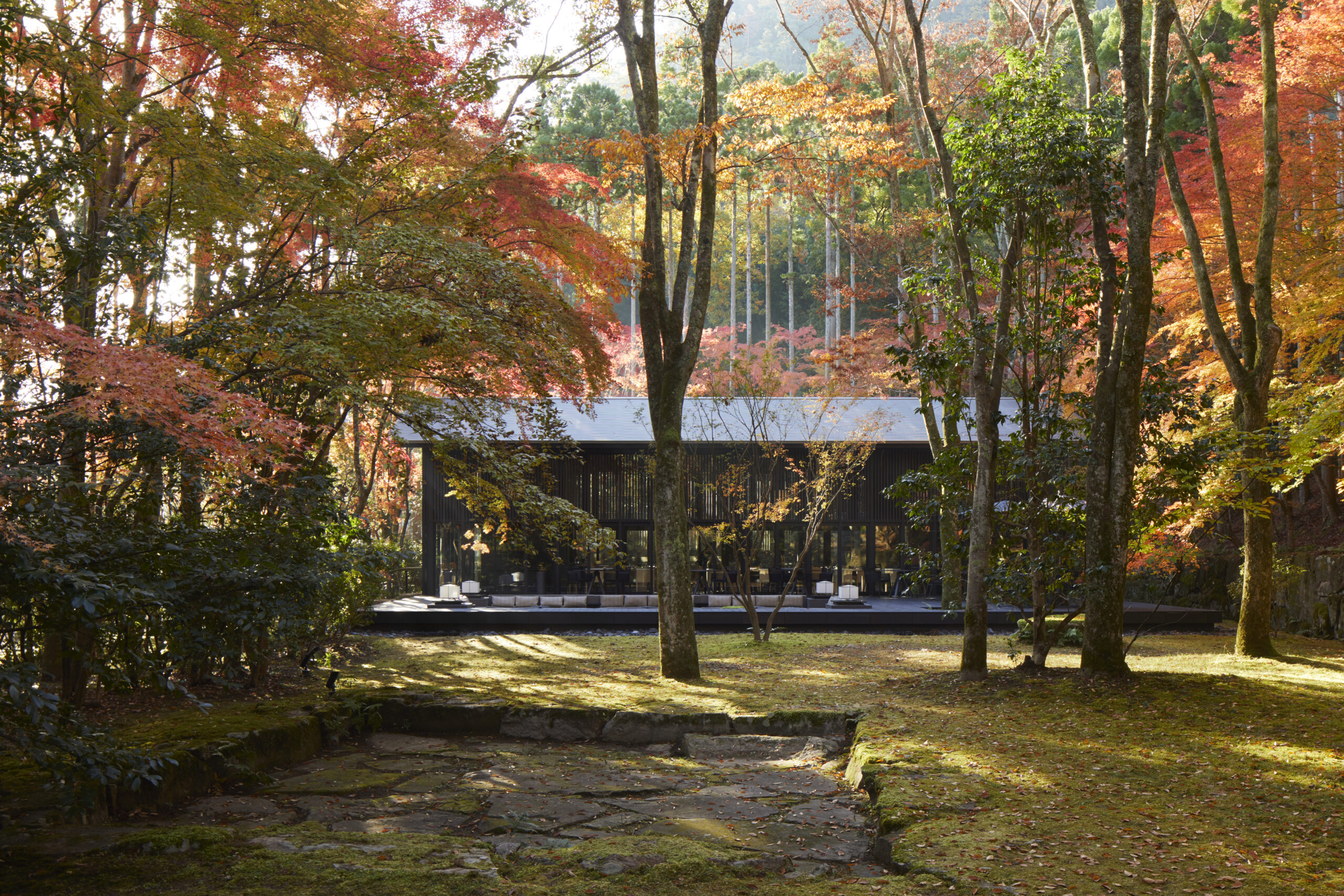
This is Aman Kyoto, a masterclass in restraint. Black timber pavilions and zinc roofs, designed by the late Kerry Hill, sit lightly within the landscape, and nothing feels imposed. The architecture simply follows the contours of a garden that has been evolving for generations.
I arrived expecting beautiful surroundings, impeccable hospitality and, naturally, excellent food. What I hadn’t anticipated was how thoroughly the senses would take over: the fragrance of wet cedar, the sound of rain on timber, the warmth of an onsen, the faint bitterness of freshly whisked matcha. It is, I would argue, the most evocative way to experience the city.
Sight: A Study in Green
The first impression is the sheer depth of green.
Moss blankets the old stone paths, a dense canopy gathers overhead and filtered sunlight drifts across the garden through the day. It is a landscape of subtle variations, from the deep greens of the forest floor to the brighter foliage catching the afternoon light.
The grounds predate the resort by centuries. Once part of a textile museum’s estate, they sit in the same northern hills that nurtured Kyoto’s artistic community and the Rinpa school of painting. When Hill took on the project, he recognized that the garden itself was the star, and had the rare good sense to let it lead.

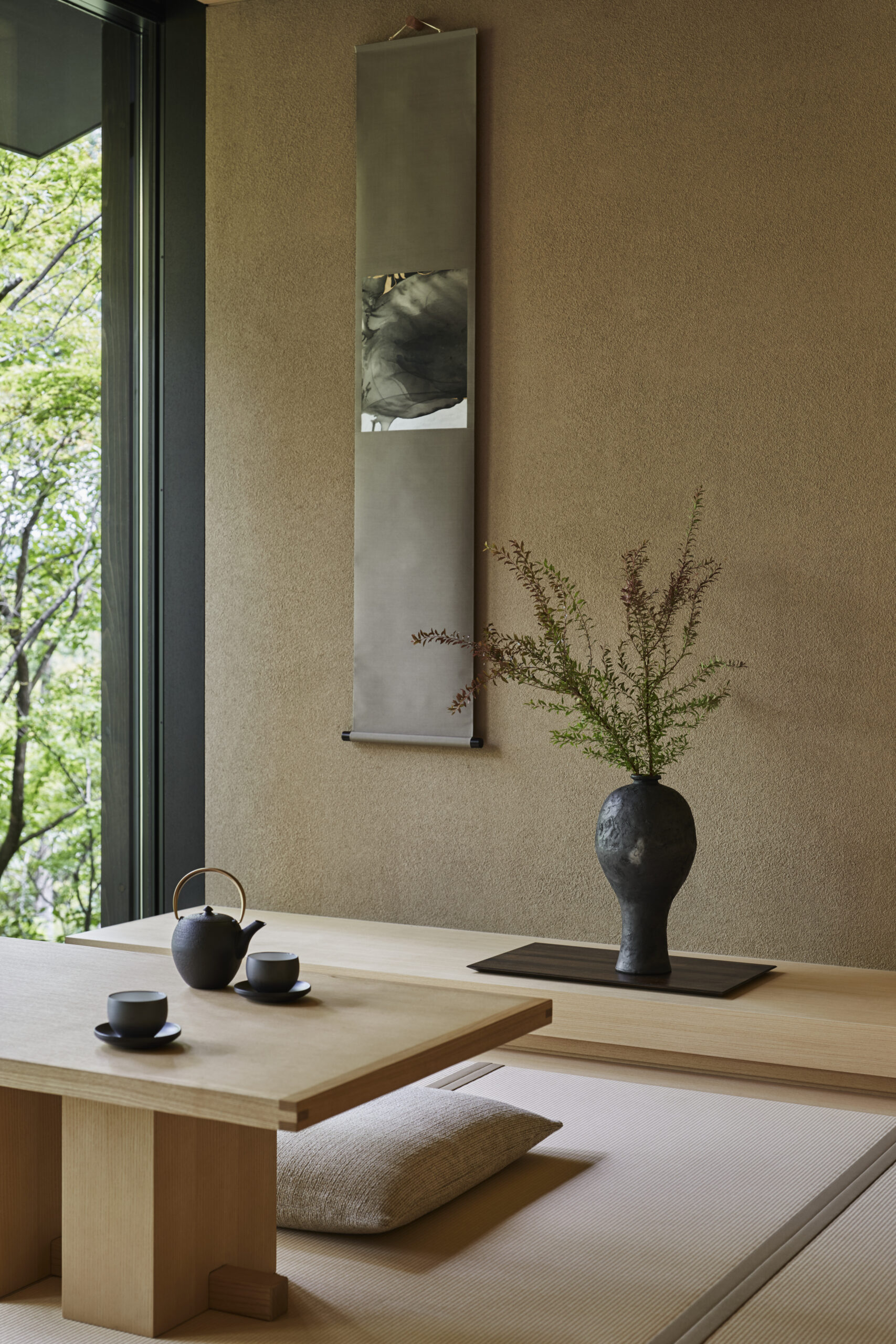
His black pavilions seem almost embedded in the landscape. Inside, the interiors are understated: natural materials, custom furnishings and expansive glass that frames the trees like living paintings. The 26 guest rooms take their inspiration from the traditional Japanese inn, with a contemporary refinement that never tips into excess.
I remember pausing on a garden path, studying a stone lantern almost swallowed by moss. Nearby, a single maple leaf had begun to turn. It was late September, that intriguing moment between summer and autumn when the foliage is still mostly green but the first hints of crimson have begun to appear.
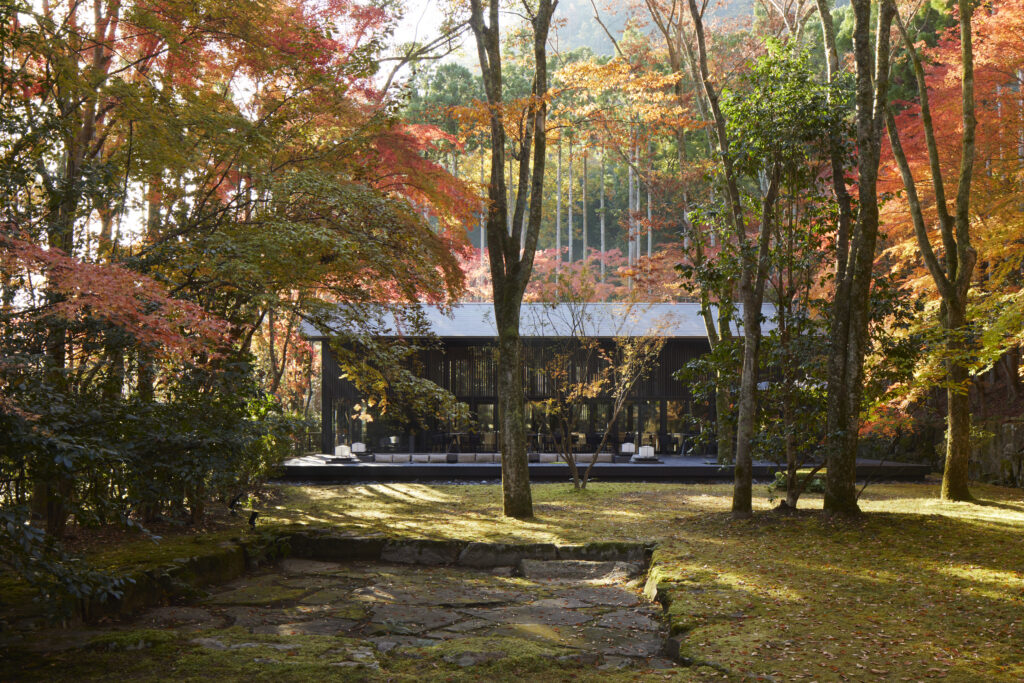
The garden changes with the seasons. Spring brings fresh, luminous foliage, summer deepens the canopy, and autumn sets the maples ablaze in red and gold. The Kerry Hill Garden, with its sculptural boulders and carefully considered composition, is especially lovely in the changing light.
There is something distinctly Japanese about this approach to beauty: an appreciation of imperfection, proportion and the passage of time.
Sound: The Forest’s Own Composition
The soundtrack here is wonderfully uncomplicated. Water moves through the garden, birds call from the trees and gravel shifts beneath your feet. Now and then a breeze passes through the canopy and the whole forest exhales.
At night, the effect deepens. Rain on the roof, droplets falling from leaves and water running softly along the pathways create a rhythm that no playlist has ever managed to replicate. From my room, with the forest visible beyond the glass, I listened for far longer than I intended.

At dusk, lanterns light the paths and cast a warm amber glow across the estate. The pavilions are gently lit, and the garden recedes into shadow.
It is a welcome departure from the usual hotel soundtrack. Background music here would have been an impertinence.
Smell: Cedar, Moss and Matcha
After rain, the garden has a distinctive fragrance: wet cedar, damp earth, moss and freshly washed stone. It is clean, woody and faintly mineral, with the freshness of the surrounding hills.
Indoors, the scent of timber adds warmth to the understated rooms. At Senkutsu, the intimate tea house tucked into the garden, incense introduces another layer. Then comes the unmistakable aroma of matcha, freshly whisked and faintly grassy, with a vegetal sweetness beneath its bitterness.
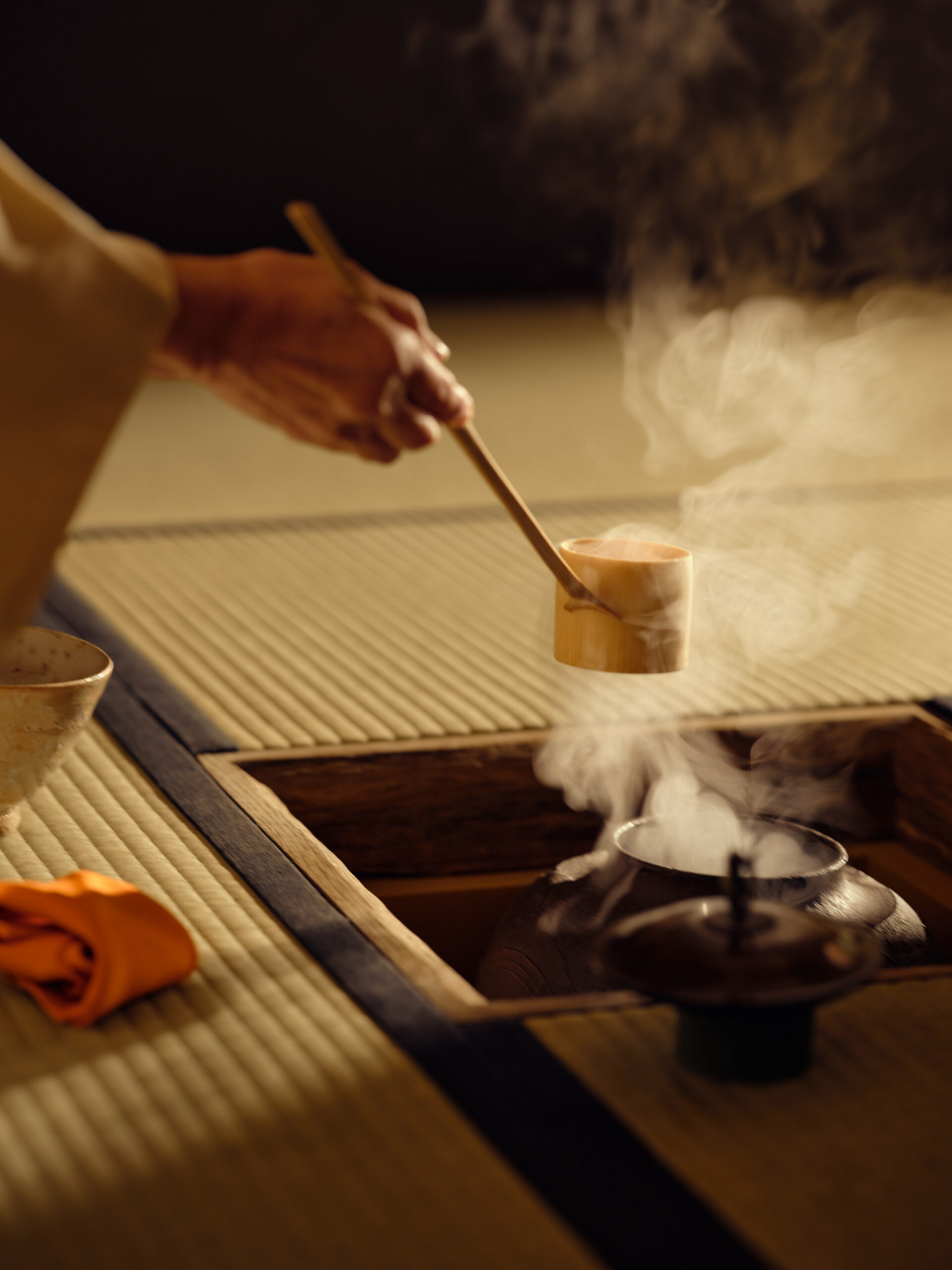
These scents belong to the rituals of old Kyoto. Incense has long been associated with the city’s Buddhist temples, while the preparation and appreciation of tea remain central to its cultural identity. Up here in the hills, they feel entirely at home.
I have always found fragrance the most powerful souvenir. Years from now, a familiar scent can bring back an entire afternoon with startling clarity, and I suspect wet cedar and freshly prepared matcha will forever return me to these northern hills.
Taste: The Art of Japanese Dining
The food is among the retreat’s greatest draws, and breakfast alone deserves a paragraph of its own. The traditional Japanese set arrives in a succession of small bowls: grilled fish, rice, miso soup, pickled vegetables and seasonal accompaniments, each beautifully presented.
I have eaten breakfast at some of Tokyo’s finest hotels, but this was my favorite of the entire trip. The setting certainly helped, with morning light filtering through the trees, although the food would have made an impression anywhere.

At Taka-an, the Japanese restaurant named in homage to the artist Honami Koetsu, dinner becomes more intimate. I sat at the counter for an omakase sushi experience, watching the chefs prepare each course with remarkable precision. The fish was delicate, the rice perfectly seasoned, and every piece arrived at precisely the right moment. There is a particular pleasure in sitting close enough to witness the craftsmanship behind each bite.
Tea offers another memorable ritual. At Senkutsu, a private tea ceremony is an introduction to the discipline and elegance of Japanese tea culture, and one I would urge you not to miss. Dressed in a kimono, I knelt as the tea was prepared and presented. Every movement was deliberate, from the whisking of the matcha to the careful placement of the bowl. The first sip was earthy and pleasantly bitter, with a richness that lingered.

And then, for a rather different kind of pleasure, there was the muskmelon shaved ice. Fragrant, impossibly light and wonderfully refreshing, it was one of those desserts that makes you wish you had ordered a second.
I came for the architecture and stayed for the muskmelon shaved ice. I stand by that.
Touch: The Warmth of Water and Wood
The physical details are deeply satisfying: the coolness of stone beneath your feet, the smooth curve of a handmade tea bowl, the warmth of timber, the gentle resistance of a traditional sliding screen.
But the most memorable experience is the bathing. Natural spring water flows beneath the grounds, and the spa channels it into indoor and outdoor onsen. I lowered myself into the warm water as the afternoon light softened, steam rising toward the surrounding trees. The temperature was perfect and the effect immediate. Travel fatigue, accumulated over flights, transfers and long days of exploring, simply dissolved.
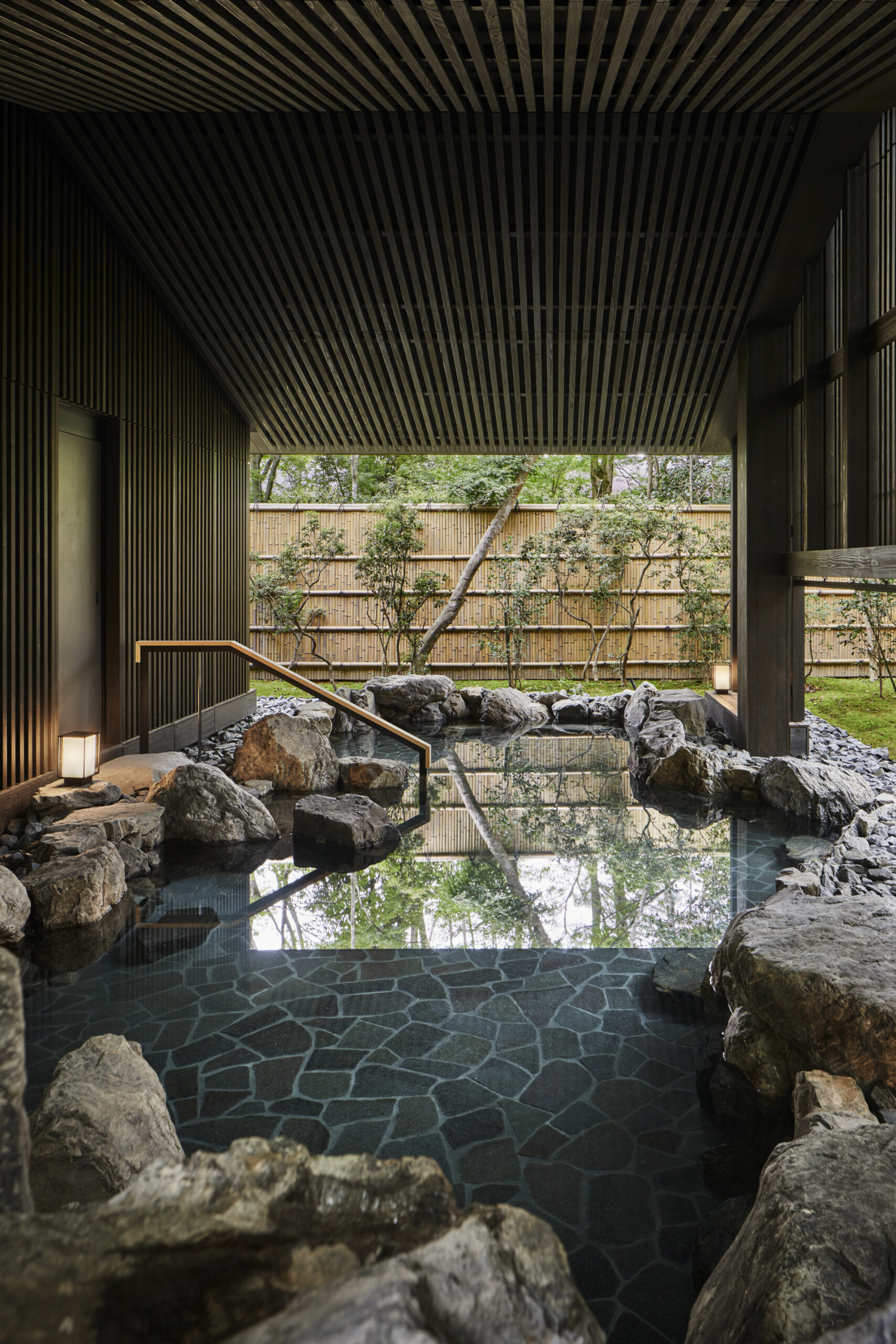
Spa treatments draw on local ingredients, including Kyoto green tea and camellia oil, and the therapists work at an unhurried pace in rooms of great calm. It is a thoroughly Japanese experience, where the ritual matters as much as the result.
You must experience the onsen here. It is, by far, my favorite in all of Kyoto.
The Beauty of Being Somewhere Else
Just over half a mile away stands Kinkaku-ji, the Golden Pavilion, its gilded exterior mirrored in the pond below. It is one of the city’s most celebrated sights and well worth the visit, though returning afterward to the quiet of the hills is a pleasure in itself. What makes this hillside hideaway so special is the relationship between its setting, its architecture and its hospitality. There is a strong sense of place, from the materials used throughout the buildings to the tea rituals, the seasonal cuisine and the spring water itself. Nothing feels disconnected from its surroundings.
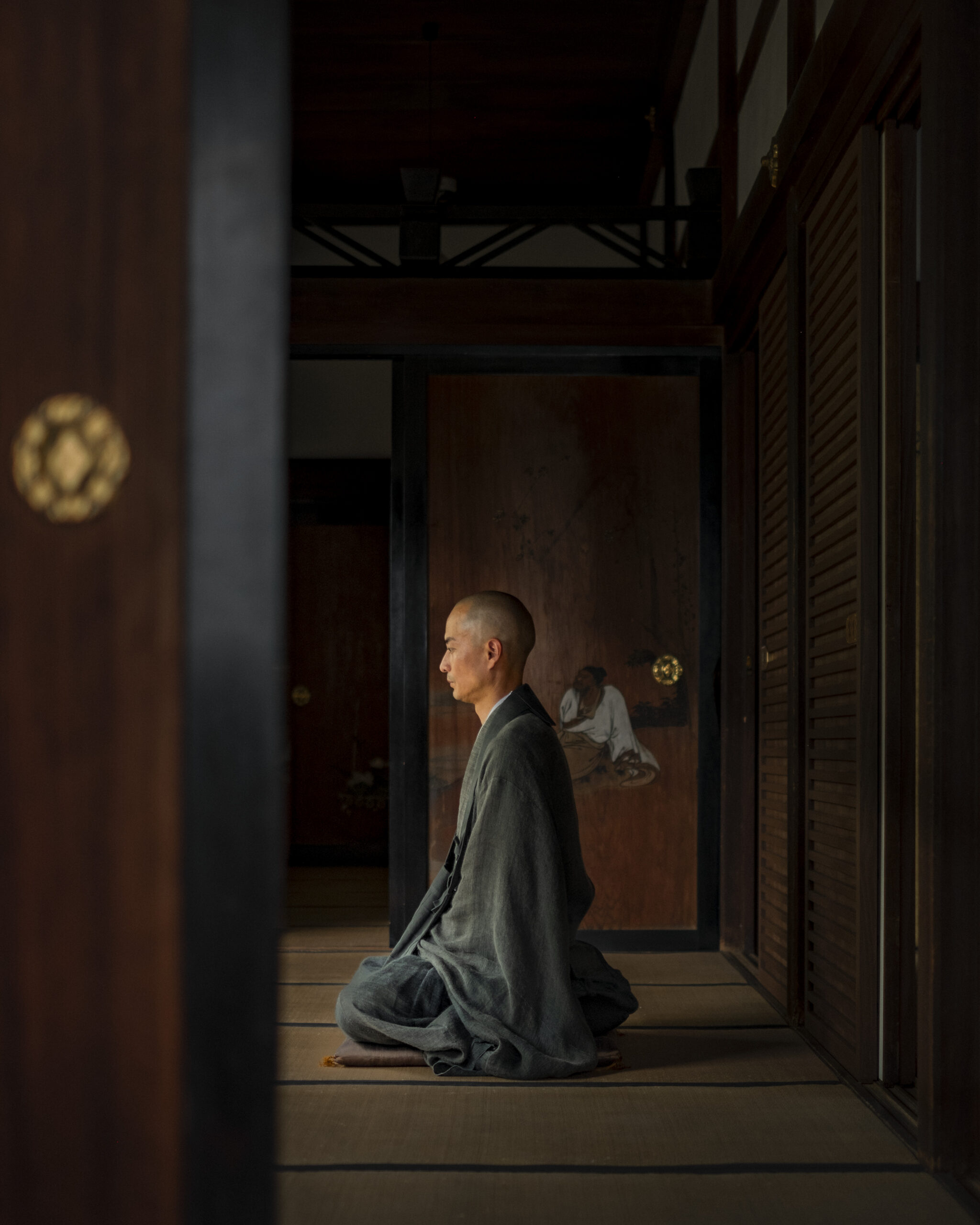
I left with memories of a beautifully prepared breakfast, an evening spent listening to rain, the fragrance of incense at the tea house and the warmth of the onsen after a long day. And, of course, the garden.
Some destinations are remembered for their landmarks, others for the atmosphere they create. Here, it is both: a magnificent natural setting, a master architect’s sensitive hand and the thoughtful details that make a stay feel genuinely distinctive.
As the car pulled away, I caught one last glimpse of the trees beyond the gate. The temples, restaurants and beautiful old streets of the city were waiting. But for a few days, I had experienced another side of it, one defined by its northern hills, its centuries-old garden and the rare pleasure of having nowhere else to be.

I would go back tomorrow. I suspect the muskmelon shaved ice would be waiting.